~From Roots to Shoots~
Plant Health Care 2021 Year in Review
It has certainly been an eventful year. A warm, wet spring was ideal for fungal diseases that can defoliate deciduous trees early. Common fungal diseases include cedar apple rust on crabapples and leaf spot on cherry trees.
The dry, hot summer was ideal for mites and our techs monitored boxwoods and other evergreen species closely for outbreaks. On a brighter note it was a fantastic year for flowering trees, especially the crape myrtles.
Invasive Insect Species
Emerald Ash Borer
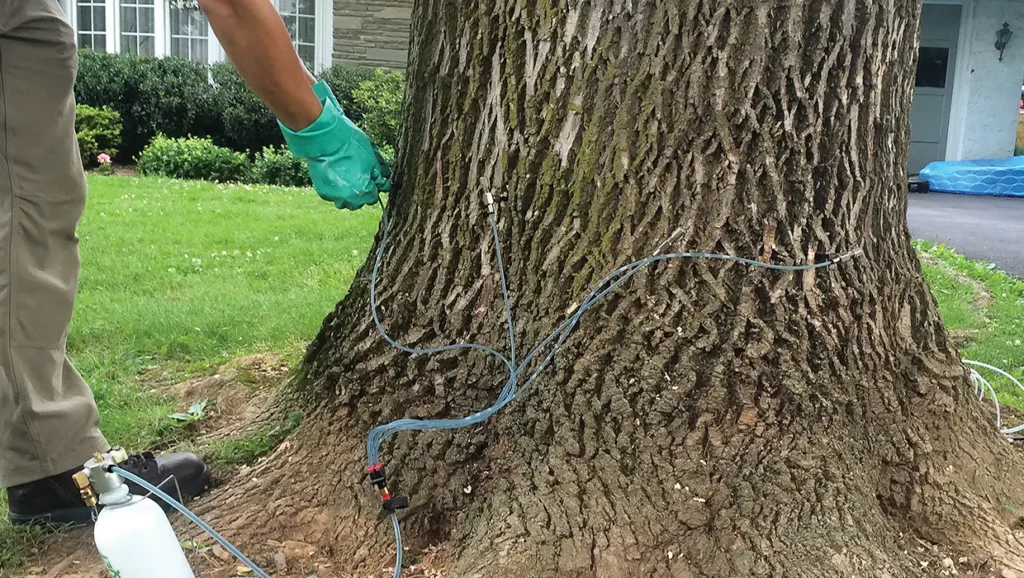
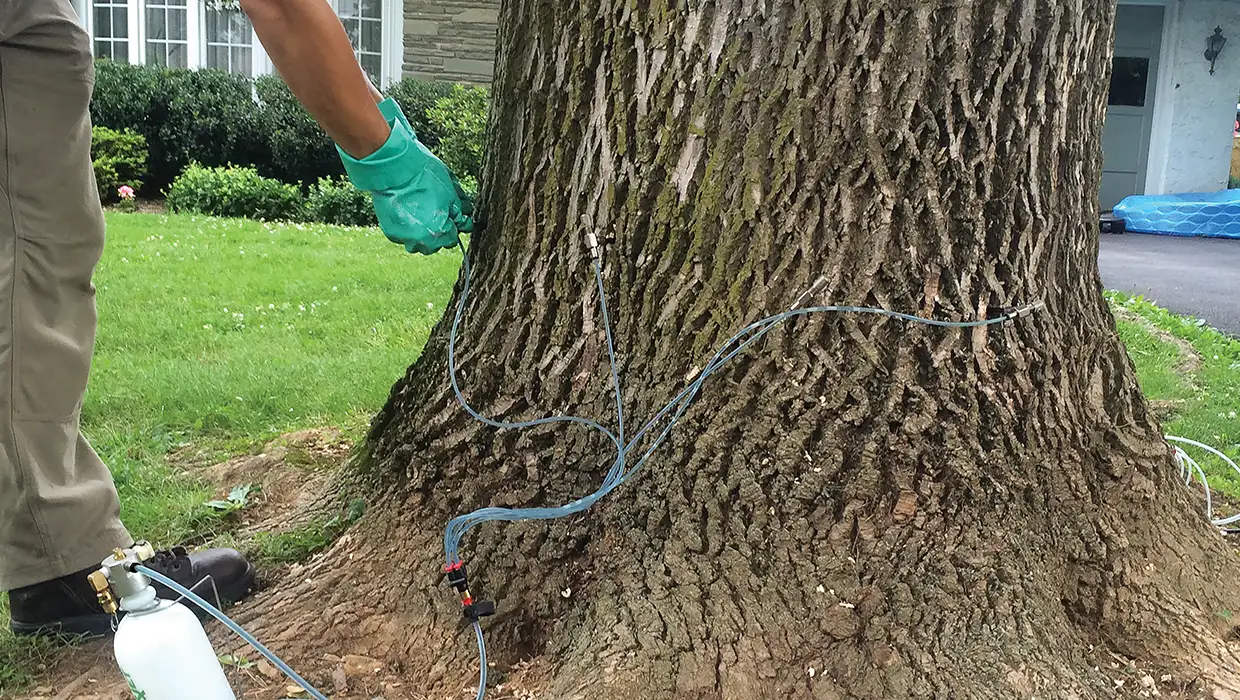
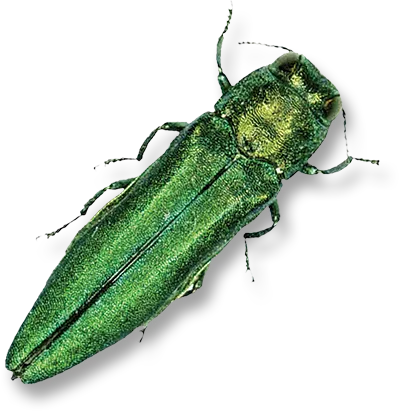
By now, hopefully everyone has heard of the invasive Emerald Ash Borer. In our last newsletter we spoke about the dilemma facing homeowners and property managers across the state. This pest has the potential to kill every ash tree it encounters. It is still possible to save your ash trees. Call us today to speak with an arborist to determine what treatment options are available for your trees.
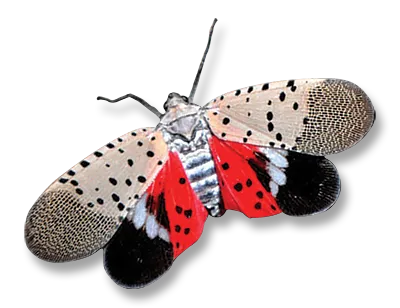
Spotted Lanternflies
Where are the lanternflies? We anticipated their numbers to be even higher after an active 2020 season. However, we were pleasantly surprised to find them absent on many of our properties. Entomologists are attributing their absence to increased predation and natural fluctuations in population. Arborists are also now familiar with their preferred species and can systemically treat hotspots to combat feeding populations. Fingers crossed that this trend continues in 2022!
Give your trees and shrubs a healthy boost!
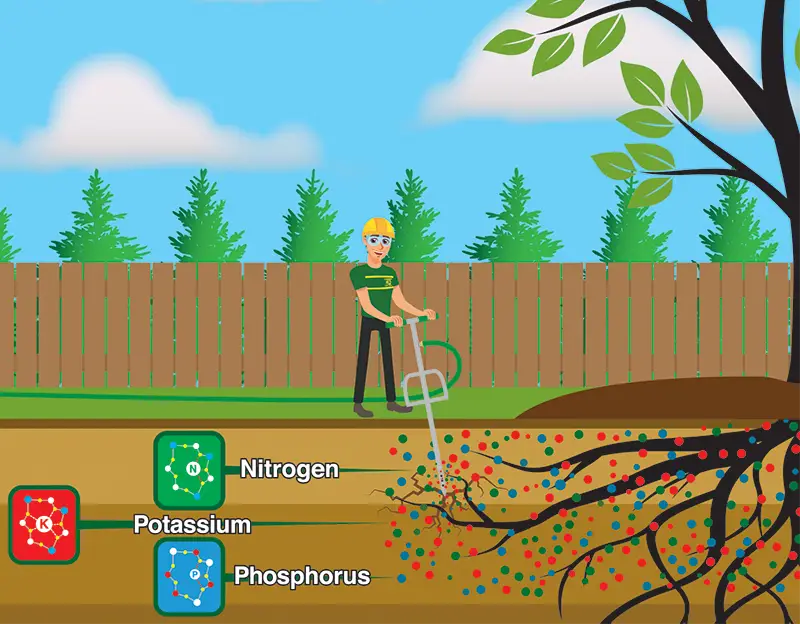
Fertilization is a critical component of tree care. Proper nutrient management enhances tree vigor and increases a tree’s natural resistance to injury from insects and diseases. We practice prescription fertilization, a process in which we take soil samples to identify nutrient deficiencies, and create custom fertilizer mixes best suited for a tree’s specific needs.
Trees under stress, particularly those which are newly planted, impacted by construction or in the latter stages of their lives are of particular focus when a Shreiner Arborist inspects your property. Our arborists are also on the lookout for trees whose leaves are off color or have a sparse canopy. In these cases, soil and foliar samples can help identify nutrient deficiencies.