1What's the best time of year to prune trees in this area?
For most deciduous trees, late winter through early spring is ideal, just before new growth begins. Pruning during dormancy reduces stress and allows wounds to close quickly once the growing season starts. Some species, like oaks, require specific timing to avoid disease. Our certified arborists will evaluate your trees and recommend the right window for each one.
2What's the difference between pruning and topping?
Topping removes large portions of a tree's canopy indiscriminately and is considered harmful to long-term tree health. Proper pruning removes specific branches using its that support natural wound closure and preserve the tree's structure. Our certified arborists follow ANSI A300 pruning standards on every job.
3How much of a tree can be safely removed during pruning?
As a general rule, removing more than 25% of a tree's canopy in one visit can cause significant stress. Our certified arborists assess each tree's health, age, and species before determining the right scope of work. For older or weakened trees, a multi-year pruning plan is sometimes the most responsible approach.
4Can pruning harm my trees?
When done correctly, pruning reduces long-term stress by removing dead weight, improving air circulation, and directing the tree's energy towards healthy growth. Improper cuts, poor timing, or removing too much can cause lasting damage. Our work always begins with a certified arborist evaluation before any cuts are made.
5How do I know if my tree needs pruning?
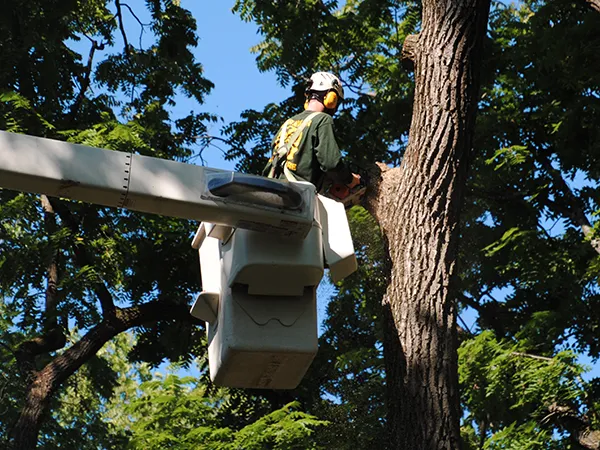
A tree may need pruning if you notice dead limbs, crossing branches, low hanging branches, heavy overgrowth, or branches growing too close to your home, driveway, roof, or utility areas. A certified arborist can inspect the tree and recommend the safest pruning approach based on its condition, species, and location.
6Can pruning help prevent storm damage?
Yes. Proper pruning can reduce weak, dead, or poorly attached branches that may be more likely to break during storms. It does not make a tree storm proof, but it can help lower risk and improve the tree’s overall structure.
7Should dead branches be removed right away?
Dead branches should be looked at as soon as possible, especially if they are above a home, walkway, driveway, play area, or parking space. Removing deadwood can improve safety and also give the arborist a chance to check if there are deeper health issues affecting the tree.
8Can pruning improve the health of an older tree?
Yes, pruning can help older trees when it is done carefully. Removing dead, damaged, or crowded branches can reduce stress and improve structure. For mature or weakened trees, the work should be done by an arborist so too much canopy is not removed at once.
9Why should a certified arborist prune my tree?
A certified arborist understands how to prune for tree health, structure, and safety. Instead of simply cutting branches back, an arborist looks at the full condition of the tree and makes cuts that support long term growth and reduce unnecessary damage.