
~From Roots to Shoots~
Plant Health Care
Prunicola Scale
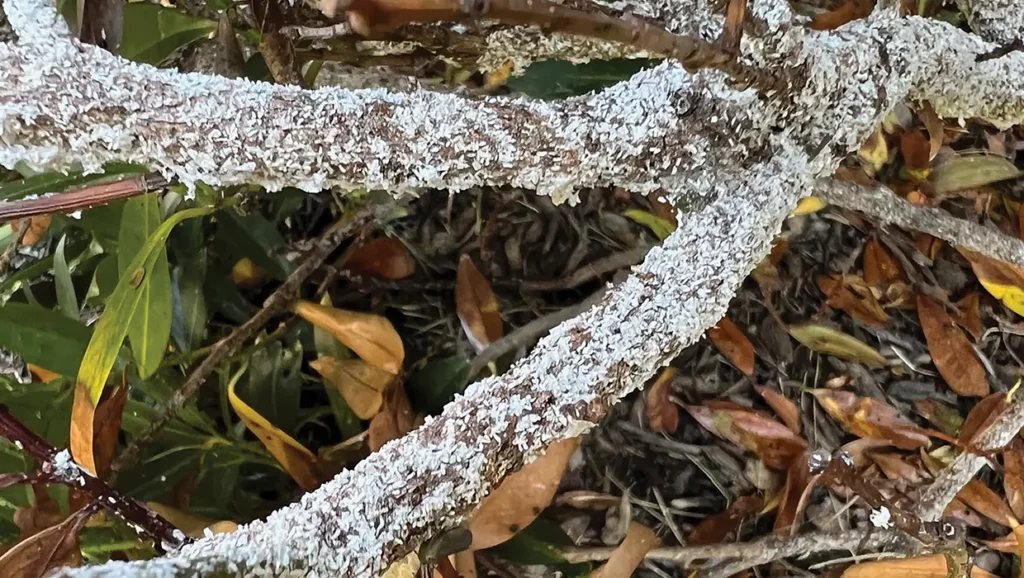
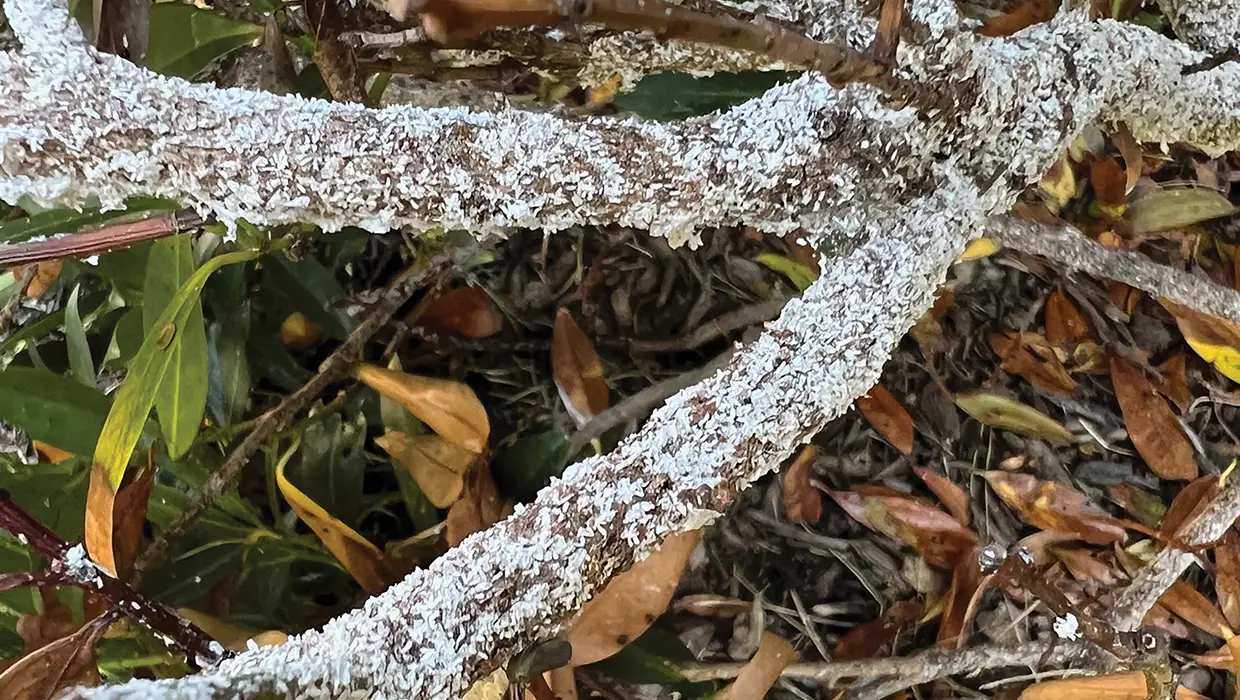
Meet the White Prunicola Scale (Psedaulacaspis Prunicola), the latest character in the drama unfolding in Main Line’s green spaces. With its distinctive white, fuzzy outfit, this pest is fond of wreaking havoc on some of our favorite evergreens, Cherry Laurel (Prunus laurocerasus) and Skip Laurel (Prunus ‘Schipkaensis). Our Shreiner arborists have been on the front lines, and they’re reporting a significant uptick in these uninvited guests on the laurels this season.
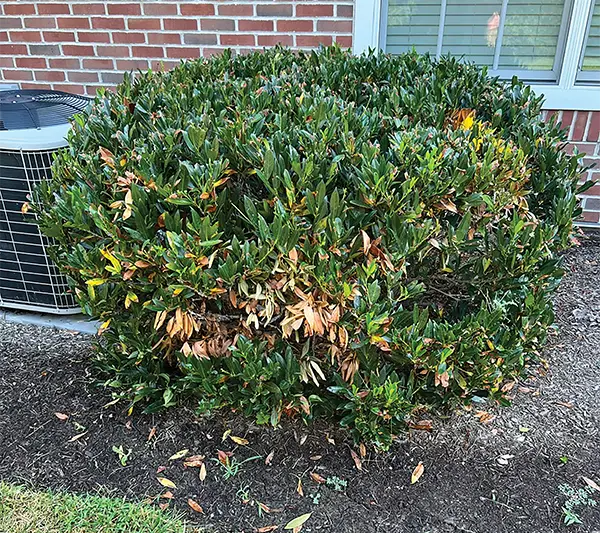
Here in Southeast PA, this pest doesn’t just visit; it sets up shop and expands its family. Each female has the potential to produce three generations in a single year, laying up to 100 eggs at a time. A full-blown invasion can occur rapidly, leading to dieback and plant loss.
However, there’s a silver lining. The White Prunicola Scale has a weakness: it’s an armored scale insect, which means it develops a wax armor for protection as it matures. Our contact treatments are strategically timed to target them during their vulnerable crawler stage. Additionally, our systemic treatments provide a long-lasting shield, effectively keeping these pests at bay throughout the growing season.
Take a look at the picture above. If you notice any similar dieback, peek inside the foliage. Then, don’t hesitate to reach out to us. We can help to combat any stealthy invaders you see.
Beech Leaf Disease
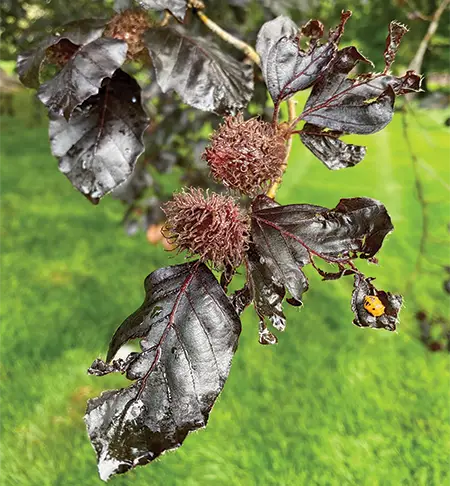
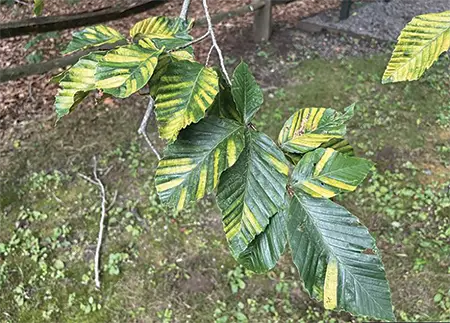
Of all the species, beech trees are one of my favorites. From the stately Copper and Weeping varieties to the steadfast Native Woodland Beech, they adorn our landscapes with recognizable silvery-gray bark. These trees, which have weathered the storm against adversaries like bleeding canker, are now facing a new and formidable enemy. Beech Leaf Disease (BLD) was discovered along Lake Erie’s shores in 2012. BLD has since marched across Pennsylvania, arriving on the Main Line in 2022. It begins inconspicuously, with just some dark, interveinal banding on the foliage. Then, it quickly turns ugly. Leaves twist, curl, and drop way before their time. In severe cases, buds are killed outright. Over the last decade, it’s claimed thousands of beeches across northern Pennsylvania and upstate New York.
Now, who’s the culprit? A tiny but mighty nematode—a kind of nightmarish roundworm. These microscopic marauders launch their attack from mid-summer to fall, burrowing into buds where they feast and hunker down for winter. Thousands can nestle in a single bud, causing the havoc we see.
The battle strategy involves maintaining tree vigor and targeting foliar nematodes during bud development. Nematicides must be used to treat entire beech canopies. Spraying alternatives are being explored, and tree injections may pave the way to the future. For a more thorough exploration of BLD, consider reading this article.
If you have a beech tree with signs of decay, call us today for an evaluation and to discuss care options. We’d be happy to help keep your beech standing tall and proud.
Why the need for Bio-Stimulate & Soil Conditioning?
In order to maintain healthy growing trees in the suburban landscape, it’s recommended that your trees and shrubs receive supplemental nutrients on an annual basis to maintain their health and vigor. Our soil-injected fertilizer is formulated to deliver essential nutrients directly to the root system that are critical for promoting photosynthesis. Additionally, during this process it will relieve soil compaction allowing for more macro and micropores which will increase the uptake of key nutrients. This will enhance their resistance to diseases and pests, ensuring healthy foliage.
Emerald Ash Borer
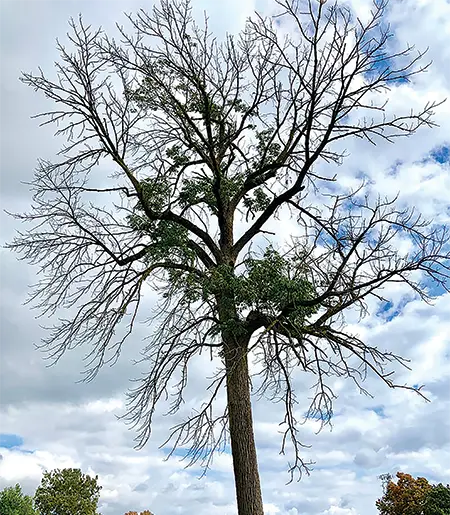
The effects of the Emerald Ash Borer (EAB) continues to be seen in the area. Dead trees can be found along roadways and in the landscape. Declined trees are increasingly becoming a serious safety concern. Continued treatment is required to preserve your ash trees.