~From Roots to Shoots~
Emerald Ash Borer Management
As the Emerald Ash Borer (EAB) has moved into our area, many homeowners are facing this dilemma – to treat or not to treat? Unfortunately, this invasive pest will kill every ash tree it encounters so there is no avoiding this crisis if you have ash trees on your property.
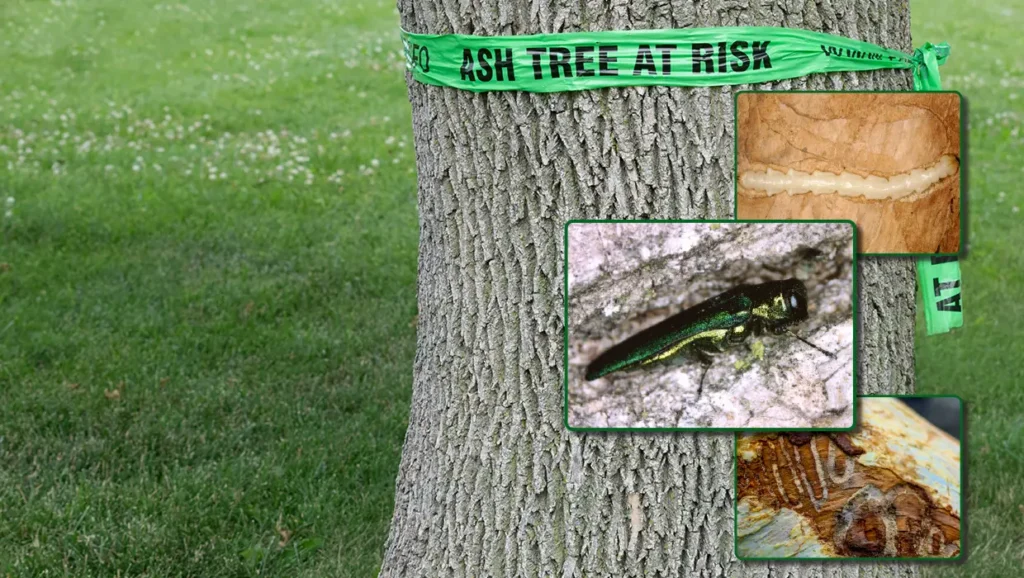
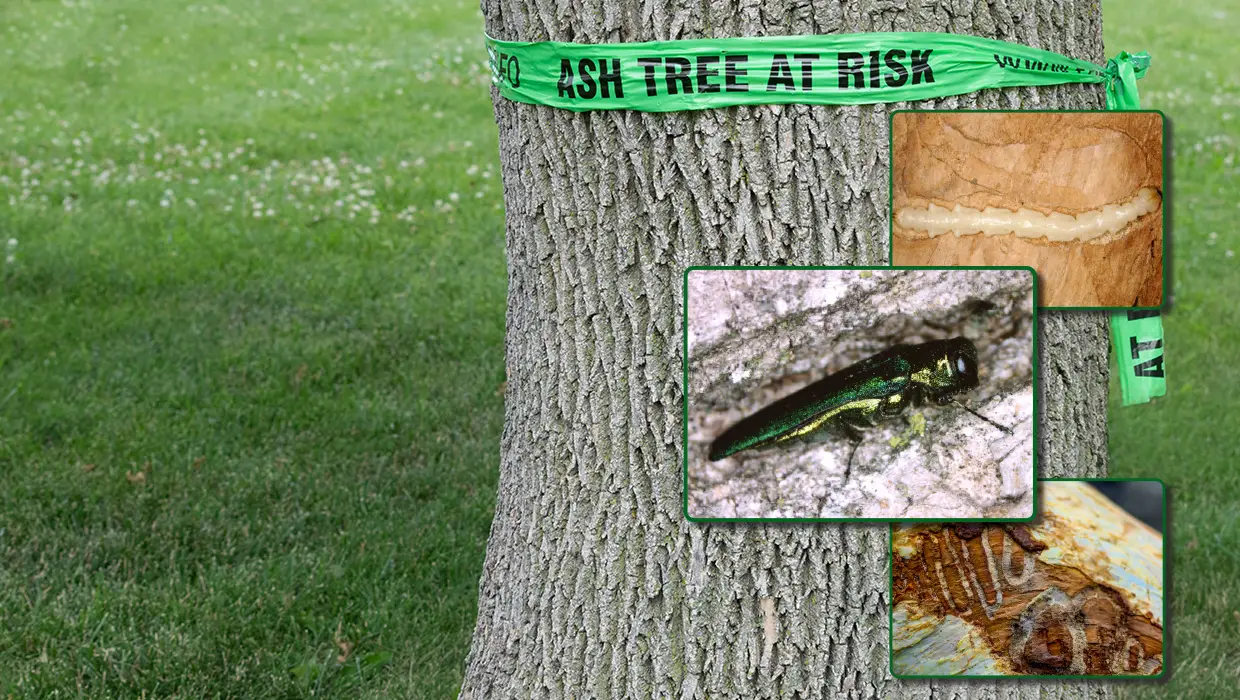
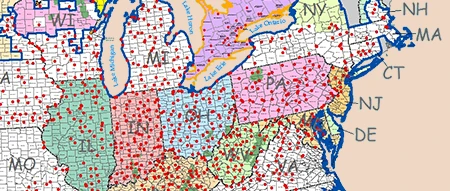
The emerald ash borer is a half-inch long metallic, green beetle from Asia. It is now in almost every county in PA. It was first identified in Michigan in 2002, and arrived in PA in 2007. The larval stage of this beetle feeds exclusively on ash trees. Trees will die within 2-4 years after infestation. Treatment is critical to protect and preserve your trees. Our arborists are actively working with our clients to develop cost effective management plans that will provide you with peace of mind and security about this impending issue.
Option 1 – Saving Healthy and Beautiful Ash Trees. High-value trees should be treated, while other less desirable or potentially hazardous ash trees can be scheduled for removal. Treatments are available which can save and preserve your ash trees. Injections performed every 2 years will control 99% of EAB larvae and are the most effective preservation techniques. Systemic treatment options provide a medium amount of control for one season. These systemic treatments can also be considered as a viable management tool when simply delaying the removal expense for properties with numerous ash trees.
Option 2 – Combination Approach: Preservation and Selective Removal. Certainly, each ash tree is different and plans should be made accordingly. A Shreiner arborist can help identify the healthy ash trees on your property and make management plans for how to best care for your trees.
Option 3 – Pre-emptive Removal. If you are not interested in preserving your ash trees, the safest and most cost effective approach is to remove them prior to their deaths. Planning in advance can help save hundreds or thousands of dollars by avoiding additional time and expenses spent removing dead trees. Wintertime removals are often less disruptive to the landscape and ground conditions are more favorable.
Option 4 – Not Treating Your Ash Trees... Not a Good Option. Once EAB begins attacking your ash trees, it will be a few quick years before the trees die so doing nothing is really only delaying the inevitable. Dead ash trees are hazardous trees. Ash tends to become brittle and fall apart when it dies. So, removing dead ash trees is more challenging and costlier than removing live ash trees due to the risks involved. By waiting, you will be putting yourself and your neighbors at risk.