
~From Roots to Shoots~
Historical Horticulture
When was the last time your average day suddenly became exceptional? Maybe a serendipitous exchange sparked a new project or collaboration with a colleague. Perhaps while mentoring, teaching, or explaining a concept to another, you had an epiphany that expanded your knowledge profoundly. For me, it was the day I walked the grounds of a medical center located just north of Norristown, PA.
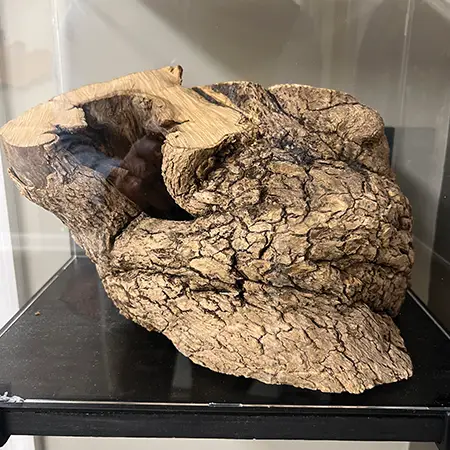
It was the early 2000s, and I was called to examine what seemed to be the last breaths of an old boxwood shrub. Little did I know that this land once belonged to the legendary David Rittenhouse, the namesake of Philadelphia’s iconic Rittenhouse Square. The shrub’s significance was a mystery then, but I felt a deep urge to preserve what was left of it. I eagerly offered advice. “Let’s prune the dead stems, mulch the base, and nourish it with a low-nitrogen fertilizer.” My hopes were high of extending its life a bit longer. Despite our efforts, the shrub waned over the years, and with a restoration project looming, its days seemed numbered. Yet, knowing its historical value, I instructed our foreman to save a piece of the boxwood stem. I thought, “Maybe I’ll research this more.” I never imagined where that thought would take me.
My curiosity piqued, I delved into the life of David Rittenhouse. Born in 1732, Rittenhouse was a prodigy, a master of mechanics, astronomy, and instrument-making, and he had a knack for precision. From his humble beginnings in present-day Fairmount Park, he advanced to become Philadelphia’s chief surveyor. In 1763, he surveyed for William Penn to settle a boundary dispute that eventually became part of the Mason-Dixon line.
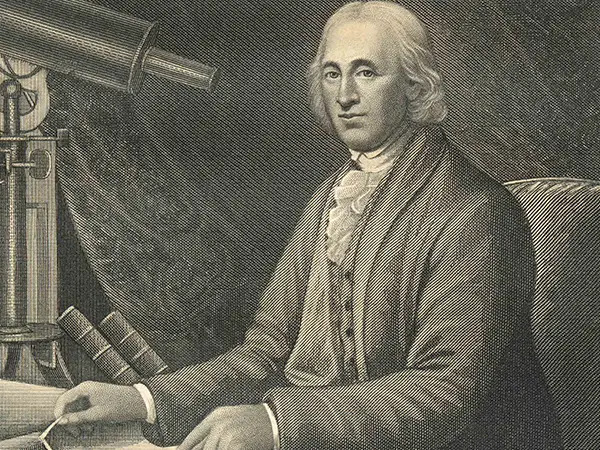
His astronomical pursuits were groundbreaking. From crafting telescopes to his detailed observations of the Venus transit, Rittenhouse was a figure of immense intellectual curiosity and capability. His work laid foundational stones for American science, earning international recognition through the pens of Benjamin Franklin and the eyes of the world during the Venus transit observations.
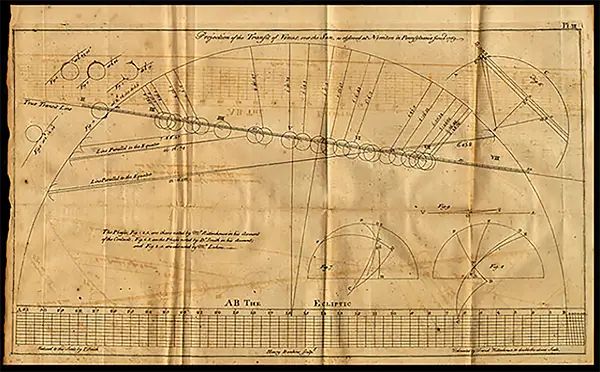
What does this have to do with the sliver of boxwood shrub kept by my foreman? Queen Marie Antoinette, moved by Rittenhouse’s astronomical achievements, gifted him four sweet shrubs. These plants, transported by Ben Franklin across the ocean and continents, found a home on Rittenhouse’s farm, a living testament to a global admiration for knowledge and discovery. Rittenhouse ordered the shrubs to be planted near the four corners of his cabin. They were symbols of intellectual kinship and respect, bridging continents and cultures. It finally dawned on me. The boxwood stem in my possession was one of the sweet shrubs planted nearly 253 years ago!
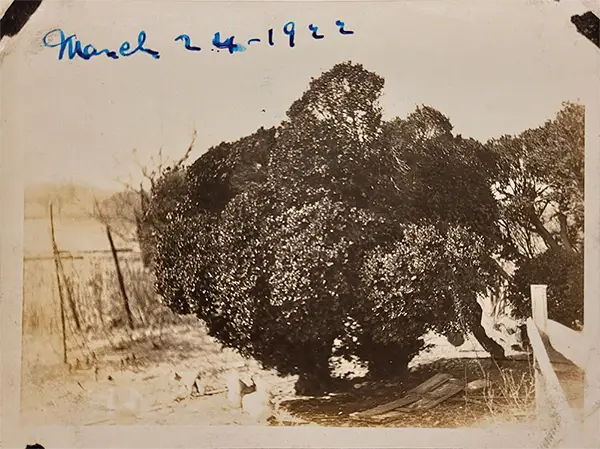
In June 1939, the Historical Society of Montgomery County placed a dedication marker on the Rittenhouse property, acknowledging his achievements. Above is a picture of his farm. If you look closely, you’ll notice one of the boxwood shrubs with chickens in the foreground.
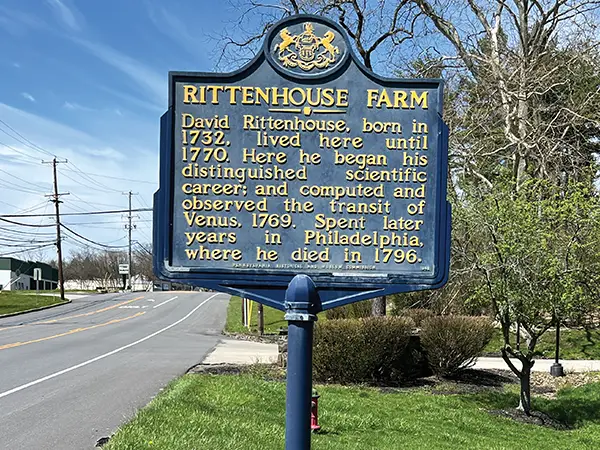
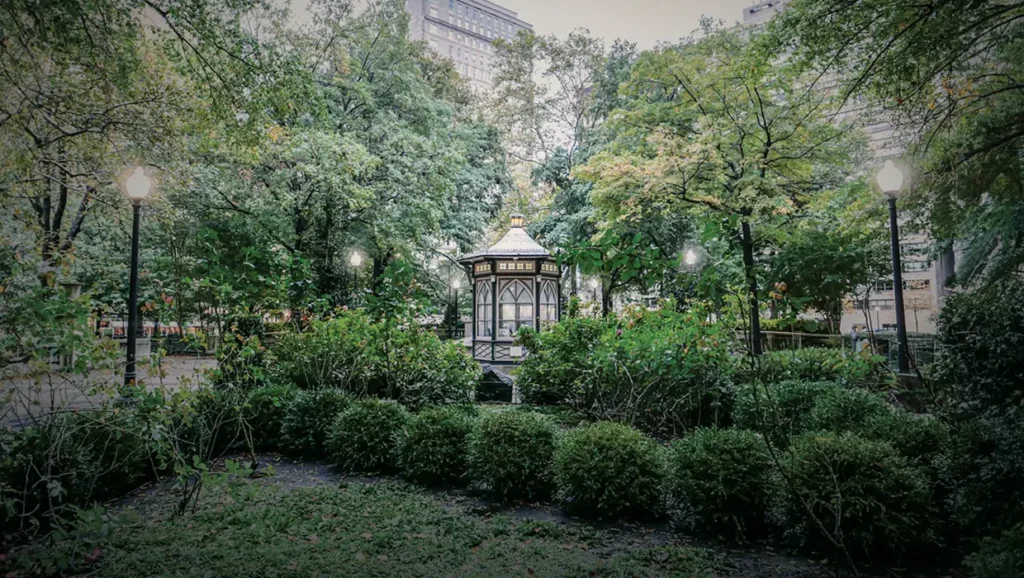
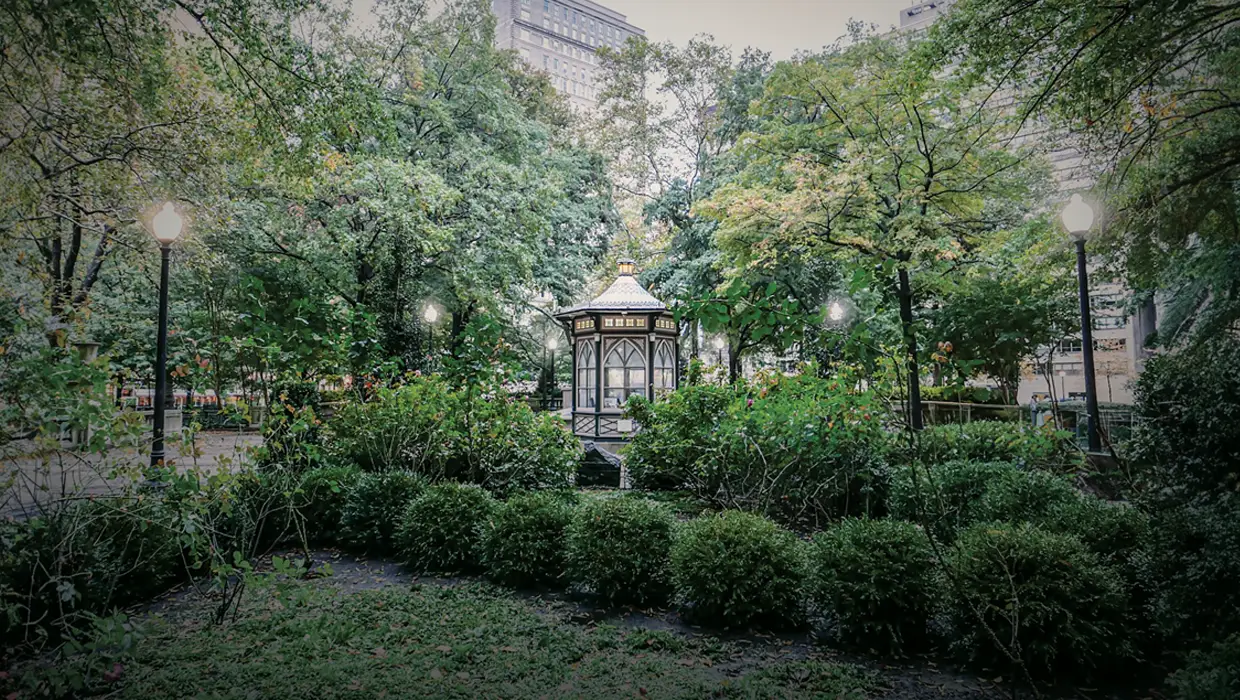
Passing away in June of 1796, the legacy of David Rittenhouse and his cherished shrubs is more than a tale of horticultural survival. It’s a narrative that intertwines the blossoming of American science, the spirit of exploration, and a thirst for knowledge. Once enveloped in dense woods and now a vibrant heart of Philadelphia, Rittenhouse Square is a tribute to a man whose life was a constellation of science, innovation, and community achievements.
A boxwood stem took me on a quest I never expected. I have a renewed interest in the history of Philadelphia and of the Main Line. I’m reminded of our enduring natural landscape and how it connects us with previous generations. Who knows, maybe some of the trees our arborists care for today will be part of a great story in the future.