
~From Roots to Shoots~
A Tree That Merits Distinction
The Osage Orange Tree
Maclura pomifera
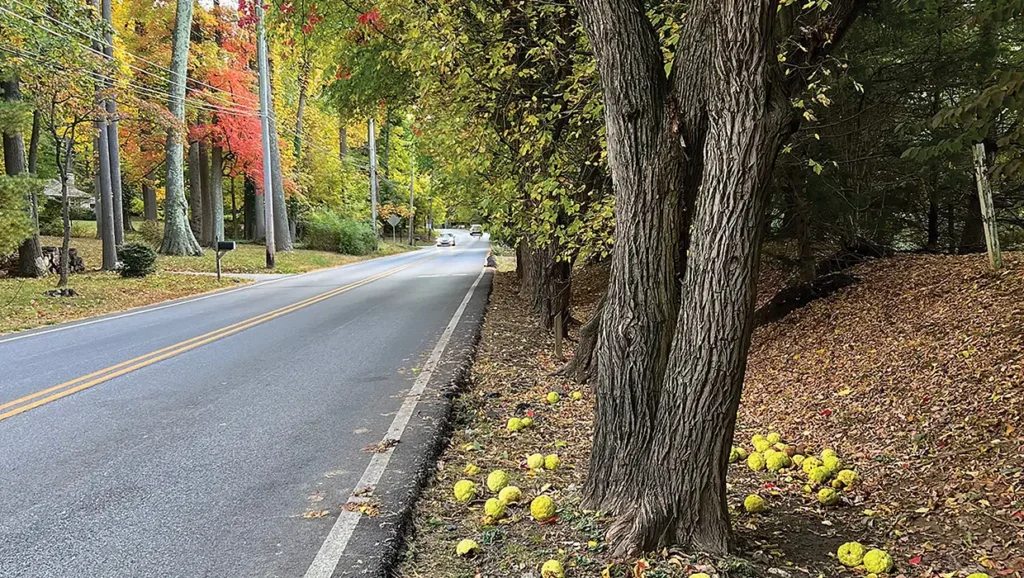
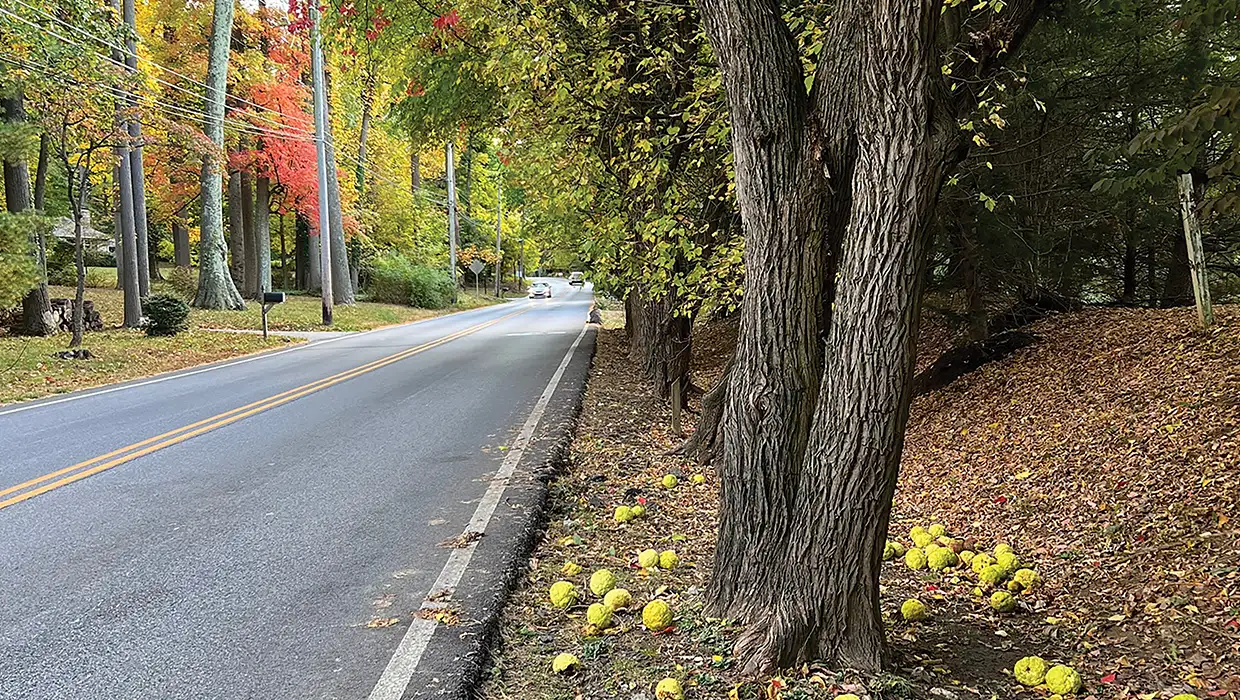
The osage orange tree is also known as a bodark, hedge apple, prairie hedge, yellowwood, bow wood, or horse apple. If you have not heard of this tree before, you may be surprised when you see it, most especially for the unusual fruit that it produces. The fruit is often seen by roadsides, and as kids, we often referred to them as monkey brains.
Monkey Brains?
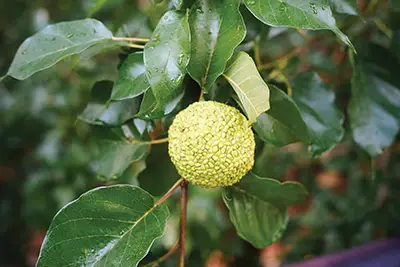
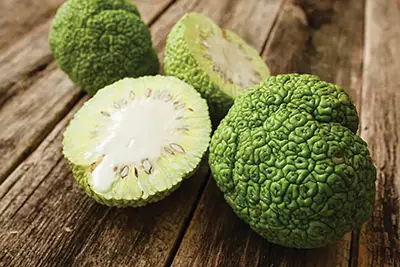
The osage orange fruit is about the size of a large orange or grapefruit, and it has a ripply, contoured surface. It is green in color, not yellow or orange, and the surface is covered with coarse hair.
Where is it found?
The osage orange tree may be found along streams, edges of wooded areas, and disturbed forests. This species of tree grows fast, is heat tolerant, will adjust to most soil conditions, and can be used as a windbreak. It’s medium sized with a short trunk, and a dense round or irregular crown. The leaves are typically 3-6 inches long and 2-3 inches wide. The color of its bark ranges from brown to orange, and when peeled back, exposes bright orange wood. The osage orange will begin to produce non-edible fruit around ten years of age. The fruit is round (3-6” in diameter), hard, and has a pale-green wrinkly skin resembling a brain. Although its fruit has limited uses, it’s the osage orange wood that is highly valuable. Its lumber is one of the most decay-resistant woods in North America and is known for being extremely strong. The American Indian and the contemporary archer uses this species of wood to craft its bows.