~From Roots to Shoots~
Storm Damage: Who’s Responsible?
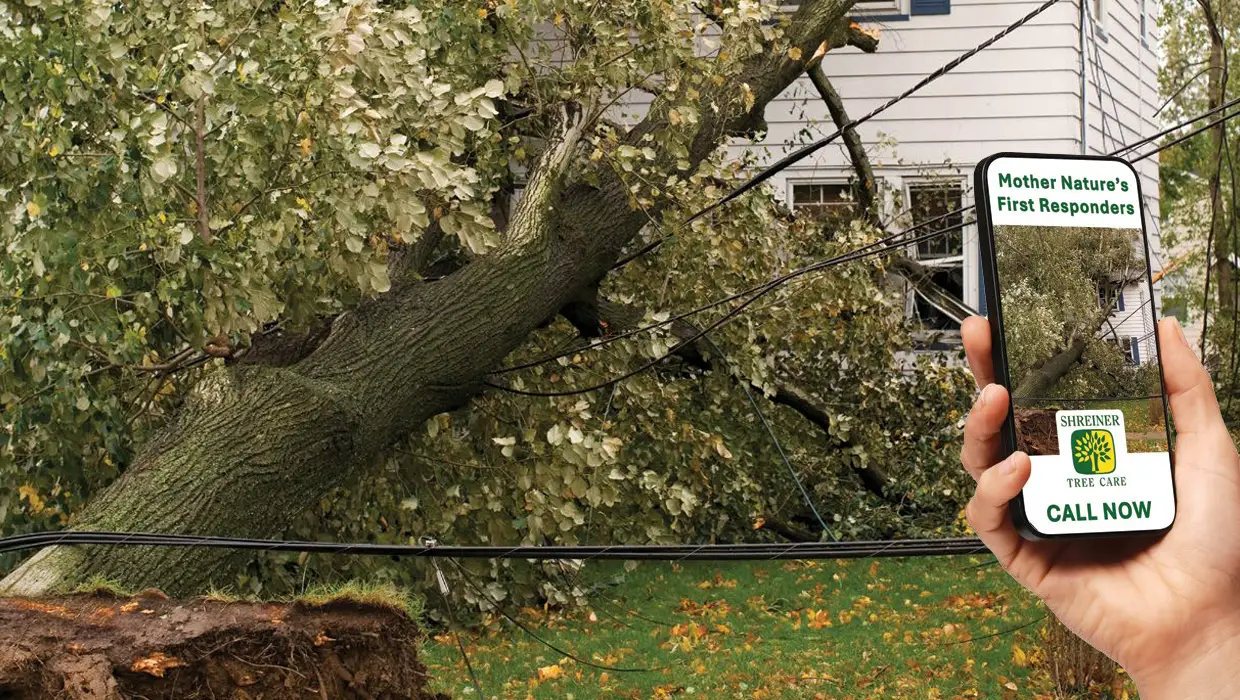
Storm damage often raises questions about responsibility, especially after a stressful event. Below, we outline common scenarios to clarify liability and next steps. Knowing your property line is essential—don’t guess! A professional survey can confirm boundaries. Contact us for a referral to a qualified surveyor in your area.
SITUATION 1 (NEIGHBOR’S TREE FALLS IN YOUR YARD [NO PROPERTY DAMAGE]):
If a tree from your neighbor’s property falls into your yard without causing structural damage, cleanup costs are typically shared between neighbors. However, if relations are strained, the impacted homeowner may need to clear debris up to the property line. Most insurance policies don’t cover cleanup costs in these cases, as no structural damage occurred, and your deductible may exceed the cleanup expense.
SITUATION 2 (NEIGHBOR’S TREE CAUSES PROPERTY DAMAGE):
If a neighbor’s tree falls and damages your property (e.g., your home or structures), your homeowner’s insurance typically covers some removal costs and repairs, minus your deductible. Coverage varies by policy, so review yours in advance to understand what’s included. In some cases, cooperative neighbors may offer to cover the deductible or contribute to cleanup costs.
SITUATION 3 (TREE STRADDLES THE PROPERTY LINE):
If a tree’s trunk shares the property line, both neighbors share legal responsibility. Either party can decide on pruning or removal, but written permission is strongly recommended before any work begins. Excessive pruning back to the property line may make you liable if it harms the tree’s health or stability. In a storm event, property damage determines which insurance policy applies.
PROACTIVE STEPS: ADDRESSING CONCERNS ABOUT A NEIGHBOR’S TREE
If a neighbor’s tree appears unsafe or threatens your property, politely inform them. They may be unaware of the issue, and a friendly conversation often prompts action. Our arborists can assist by inspecting the tree, mediating discussions, and providing written documentation of concerns. This documentation is critical for protecting you financially if the issue is ignored.
RECOMMENDATIONS:
- Be Neighborly: Start by discussing concerns with your neighbor and request a tree inspection.
- Document Everything: Follow up verbal agreements with written confirmation.
- Review Your Insurance: Consult your homeowner’s insurance agent to clarify coverage for tree-related damage.
- Seek Expert Help: Our arborists are available to assess trees, mediate neighbor discussions, and provide professional guidance.