Winter Burn
Description
Winter burn is a condition that affects many broadleaf and needled evergreens when exposed to harsh winter conditions in unprotected locations. A combination of low soil moisture, freezing temperatures, and wind reduces the ability of the plant's roots to replace water that is being released or transpired by the foliage.
Symptoms & Diagnosis
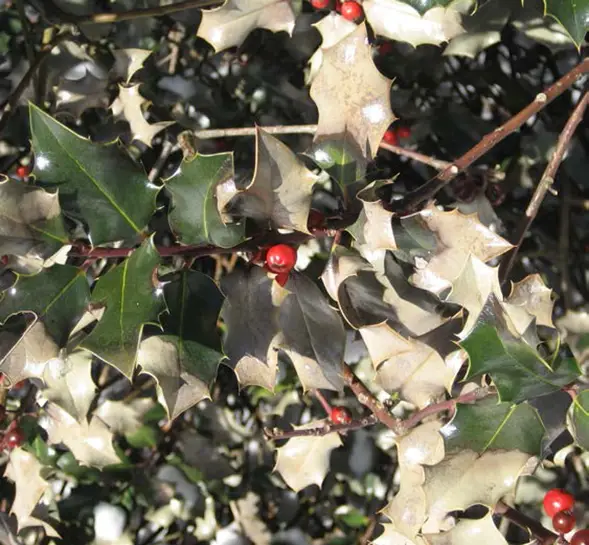
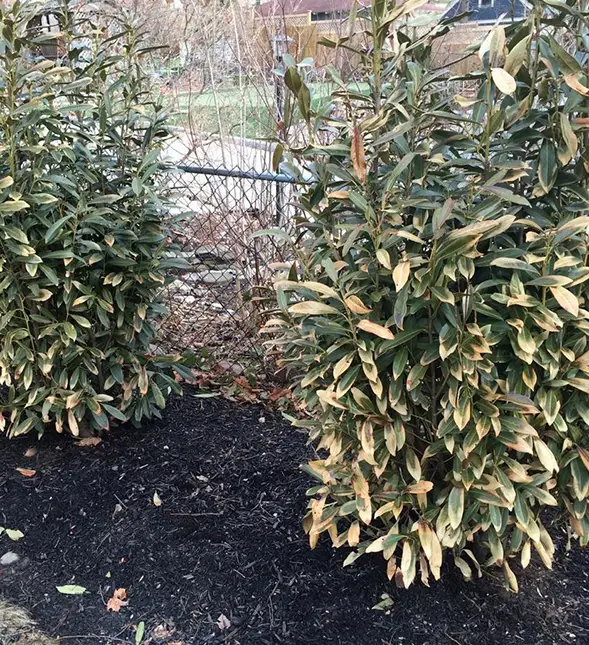
As spring approaches, foliage will start to brown at the tips before progressing inwards. South and west facing sides of the plant are usually most affected. Damaged leaves will fall off in the spring when new foliage begins to develop. Dead plants will remain brown throughout the growing season.
Treatment
Proper timing of transplanting and pruning will ensure young and mature evergreens have enough time to establish or maintain an adequate root system. Materials like burlap or foliar-applications of anti-desiccants will also decrease winterburn. Repeat treatments are necessary for maximum protection.
Management
Managing plant stress is a crucial component of plant health management. Plants can remain healthier and aesthetically pleasing longer by properly managing water, avoiding compaction and grade changes, and controlling disease and insect pests. Fertilization improves plant vigor.
Affected Species
- Buxus spp. (Boxwood)
- Laurus spp. (Laurel)
- Rhododendron spp. (Azalea)
- Thuja spp. (Arborvitae)
- Ilex spp. (Holly)