Roseslug Sawfly
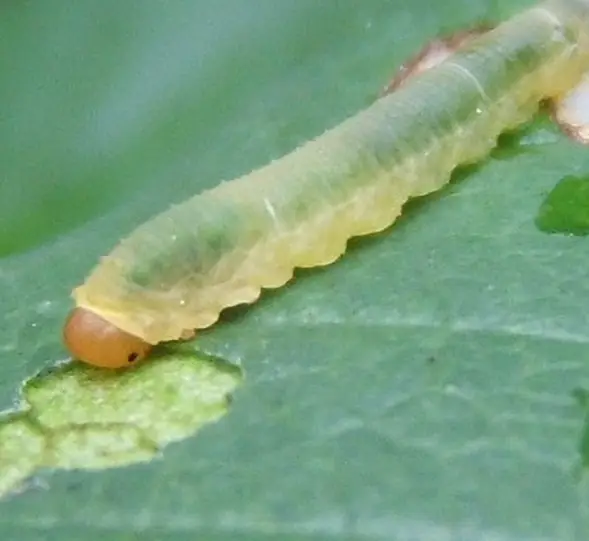
Endelomyia aethiops
Description
The roseslug sawfly is an invasive pest from Europe that often causes damage on wild and cultivated varieties of roses. There is one generation of Roseslug sawfly per year. Larvae will hatch from mid-april to early May before spinning cocoons by mid June. Adults will emerge in the early spring to lay eggs.
Symptoms & Diagnosis
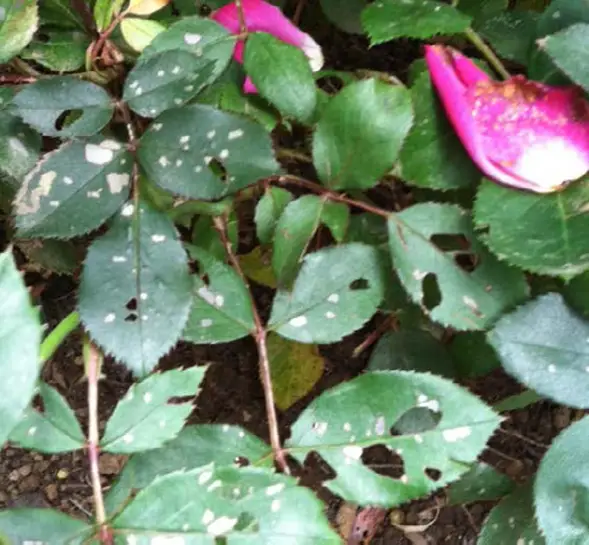
Damage from the roseslug sawfly will usually appear in early to mid-May, after larva hatch. Feeding can continue through June if climate conditions are favorable. Larvae will feed on the soft tissue of the rose leaf thereby skeletonizing the leaf. Extensive damage will appear as tan patches throughout the foliage. Damage is rarely a health concern, but can result in a severe decline in aesthetic value.
Treatment
Scouting and early detection is an important step in mitigating sawfly infestation. The earlier an infestation is detected, the more treatment options are available. If an infestation is small enough, removing the pests by hand may suffice. Preventative treatments are available for lasting control.
Management
Managing tree stress is a crucial component of insect management. Trees can remain healthier and aesthetically pleasing longer by properly managing water, avoiding compaction and grade changes, and controlling disease. Fertilization improves plant vigor.
Affected Species
- Rosa spp. (Rose)