Powdery Mildew
Description
Powdery mildew is a common disease that affects a wide variety of trees and shrubs in the landscape. It is usually of cosmetic concern and plant death is an uncommon occurrence. Powdery mildew infections will be most prevalent mid to late summer with high humidity but can occur throughout the growing season.
Symptoms & Diagnosis
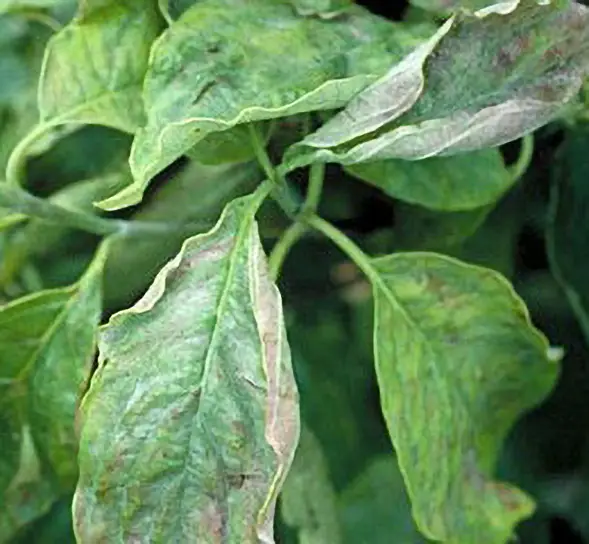
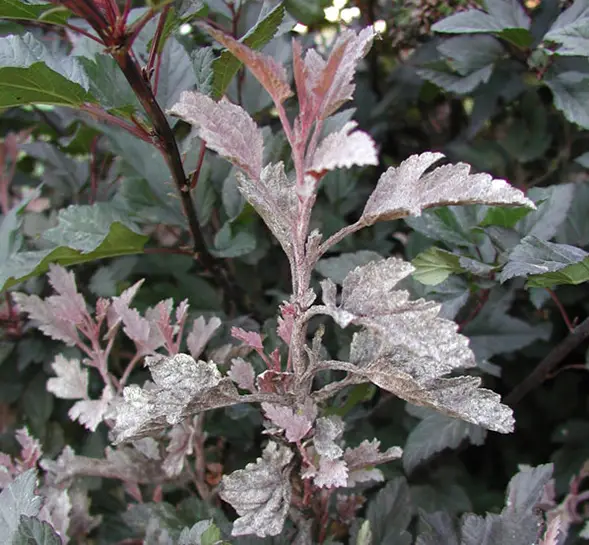
Powdery mildew will result in a conspicuous, superficial growth of white and gray fungal matter. Leaf discoloration, disfigurement, and stunting will occur if left untreated. Infection will usually start on younger plant material, but can spread rapidly to mature material if left untreated.
Treatment
Regular scouting for Powdery mildew is an effective means to identify disease before outbreak. Foliar applications can function as both a prophylactic and curative measure throughout the growing season.
Management
Raking fallen leaf matter in the fall will reduce favorable environments for disease development. When applicable, removal and disposal of diseased plant matter will help prevent additional spreading. Fertilization improves plant vigor.
Affected Species
- Lagerstroemia spp. (Crape Myrtle)
- Cornus spp. (Dogwood)
- Syringa spp. (Lilac)
- Physocarpus spp. (Ninebark)