Leaf Spot Diseases
Variety of species
Description
Leaf spot diseases are a common occurrence on a wide variety of trees and shrubs throughout the landscape. A majority of leaf spots are caused by fungal agents, with few instances caused by bacteria. While a cosmetic concern at low infection loads, more severe infections result in plant stress and susceptibility to other insect and disease issues.
Symptoms & Diagnosis
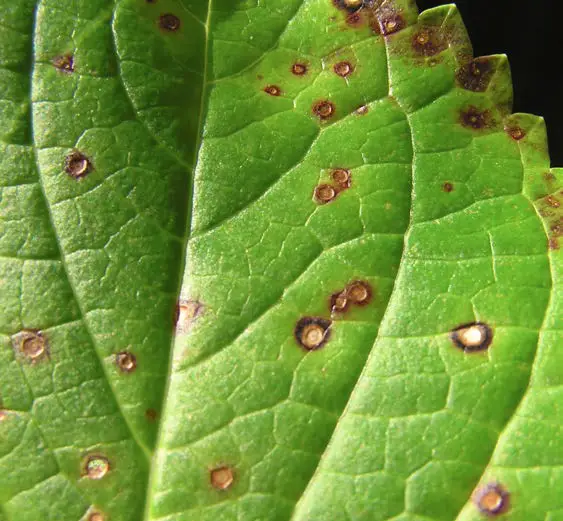
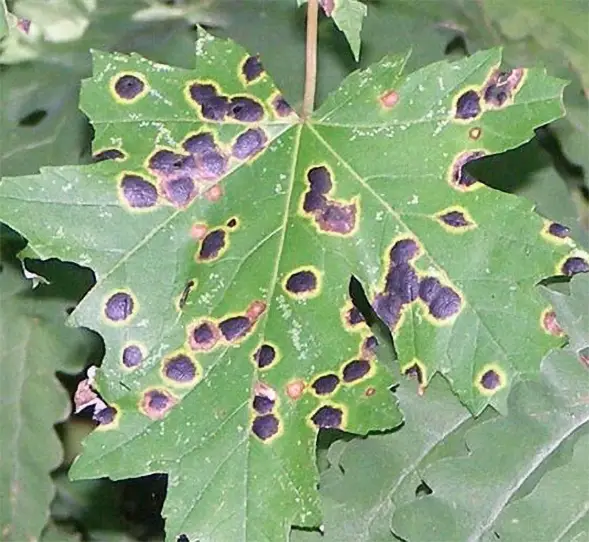
Generally, infected plants will display brown or black spots surrounding by a pale green or yellow halo. If infection is high, spots may blend together to form blotches on leaves. Each variety of fungal or bacterial induced leaf spot will have a unique look.
Treatment
Cultural practices, such as raking up fallen leaves and allowing for adequate spacing among plantings, can help reduce infections. Pruning to allow more air circulation and sunlight have a positive effect on disease reduction. Foliar applications may be used as a preventive measure.
Management
Managing tree stress is a crucial component of disease management. Trees can remain healthier and aesthetically pleasing longer by properly managing water, avoiding compaction and grade changes, and controlling insect damage. Fertilization improves tree vigor.
Affected Species
- Rhododendron spp. (Rhododendron)
- Hydrangea spp. (Hydrangea)
- Acer spp. (Maple)
- Lingustrum spp. (Privet)
- Leucothoe spp. (Leucothoe)