Iron Chlorosis
Description
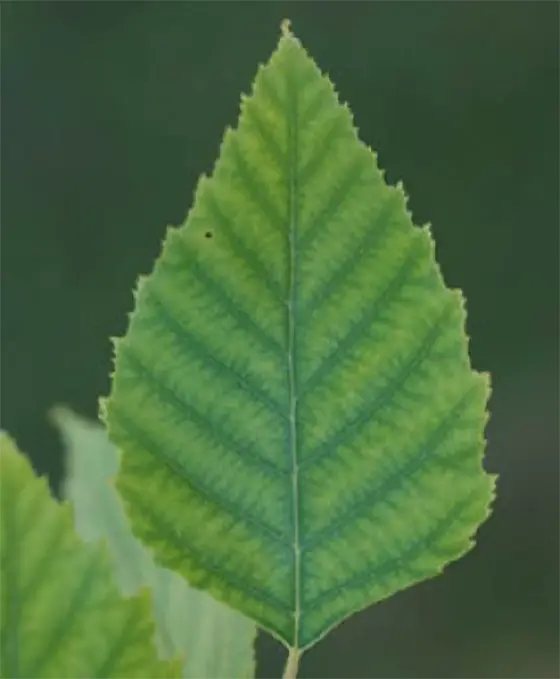
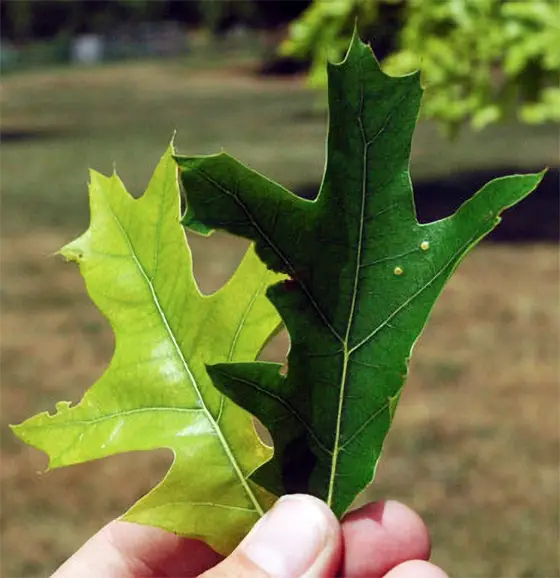
Iron chlorosis is a condition common to many landscape plants caused by an iron deficiency in the plant. Iron chlorosis shows itself as yellow leaves caused by a lack of chlorophyll. This can occur on individual branches, or throughout the entire canopy. Left untreated, iron chlorosis can weaken plants, predisposing them to other problems and shortening their life span.
Causes
Iron chlorosis frequently occurs in alkaline soils with a pH greater than 7.0-7.5. Although there may be plenty of iron in the soil, the high pH causes chemical reactions which binds the iron together and leaves it unavailable to plants. The iron will remain tied up in the soil unless conditions change. Iron chlorosis can also be caused by anaerobic conditions such as high compaction or water-saturated soil.
Treatment
Soil samples are required to diagnosis iron chlorosis. Other factors such as insect and diseases must be first ruled out. Treatments should target lowering the soil pH to an acceptable range to make the iron available to plant material.
Management
Annual soil tests are required to ensure the soil pH is within an acceptable range for the plant's needs. Water should be managed and compaction avoided to prevent low-oxygen levels in soil which can exacerbate iron chlorosis. Soil amendments to correct pH and fertilization will improve tree health and vigor.
Affected Species
- Azalea
- Pin Oak
- River Birch
- Roses