Emerald Ash Borer
Agrilus planipennis
Description
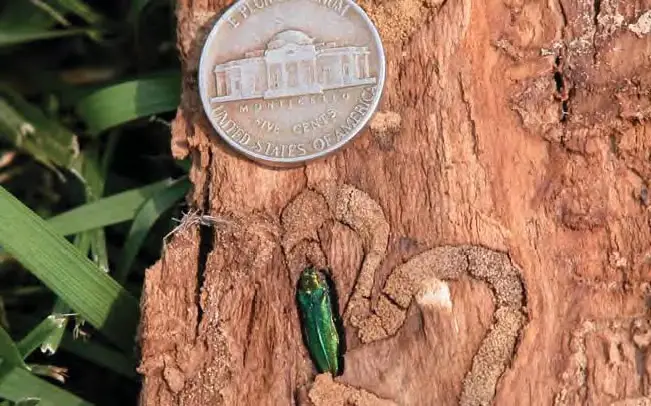
Emerald Ash Borer is an invasive woodboring insect exclusively targeting Ash trees. EAB larvae overwinter under the bark of Ash trees and feed in serpentine galleries. The feeding quickly girdles and kills branches and ultimately leads to the death of whole trees. In late June 2016, Shreiner Tree Care discovered EAB adults in our immediate service area.
Symptoms & Diagnosis
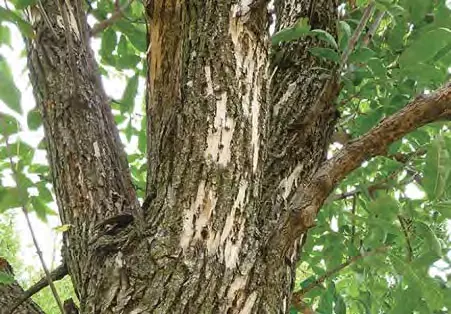
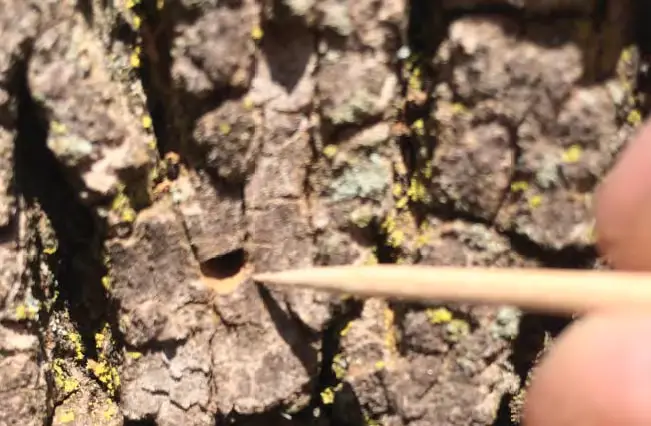
Symptomatic Ash trees exhibit branch dieback and epicormic shoots emerging from the trunk. As the tree continues to decline bark will crack and peel off the tree. Adult EAB emerge from beneath the bark between May and July leaving distinct D-shaped exit holes. Woodpeckers feed on EAB larvae, therefore, heavy woodpecker damage on Ash trees should be carefully examined as a possible indicator of EAB presence.
Treatment
Ash trees can be protected from EAB with preventive treatments. A Shreiner arborist will help determine the best option for protecting your trees. Treatment options include injections and soil-applied systemic drenches. Trees should be injected every 2-3 years.
Management
All species of Fraxinus (Ash) are vulnerable to attack from EAB. Studies show that 95-99% of untreated Ash trees will die within 5 years of infestation. Ash trees infested with EAB quickly become brittle leading to branch failure. Severe infestation requires immediate removal to protect your and your property's safety. Ash trees can remain healthier and more vigorous longer through proper pruning and fertilization.
Affected Species
- Fraxinus spp. (Green Ash, White Ash, Fringe Tree)