Boxwood Blight
Cylindrocladium buxicola
Description
Boxwood Blight is a serious fungal disease that affects all species of boxwood. It can additionally affect two of the most commonly planted ground covers - pachysandra and sarcococca. The disease is spread by fungal spores which develop under warm and moist conditions. Irrigation, rain, landscape tools, people, and pets can all aid in the rapid spread of spores through a landscape. Under favorable conditions, the fungal pathogens may complete a life cycle in less than a week.
Characteristic Symptoms
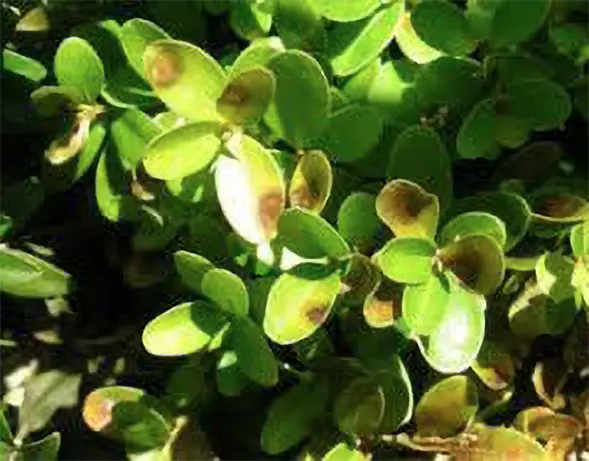
Leaf Spots: Spots start off as light or dark brown circular areas on leaves, usually with a yellow halo. As the spots increase in size, the entire leaf will become blighted. Lesions are usually visible on both sides of the leaf.
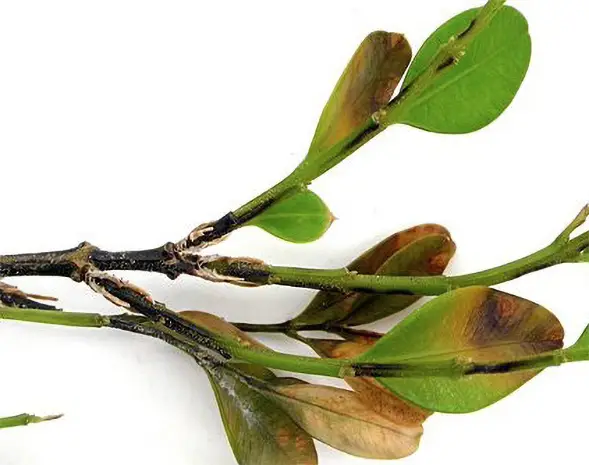
Stem Cankers: Dark brown or black, diamond-shaped or linear cankers are clearly defined against the green stems.
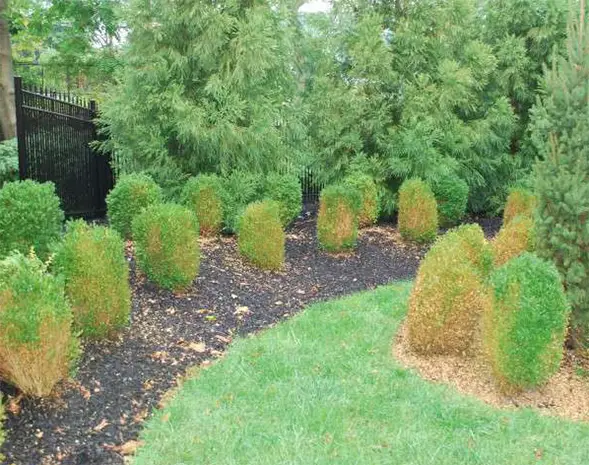
Defoliation: Defoliation tends to start near the base of the plant and work its way up. This is a characteristic symptom of boxwood blight as other, more common boxwood problems, do not cause defoliation.
Treatment
Fungicide applications can help slow the spread of blight spores in a landscape but are not a cure. Repeat applications are made every 21-30 days for most effective control.
Management
Sanitation is critical for managing Boxwood Blight. Irrigation, pruning tools, and equipment must be carefully managed to avoid spreading the disease throughout the landscape. Diseased plants should be removed and bagged to avoid further spread of fungal spores. Every property is different and requires a prescribed approach. A Shreiner arborist can help develop a management plan for the boxwoods on your property.