Beech Leaf Disease (BLD)
Litylenchus crenatae mccannii
Beech leaf disease (BLD) is a relatively recent threat to beech trees. First discovered along the shores of Lake Erie in 2012, it is now present throughout Pennsylvania, reaching the Main Line in 2022.
Cause
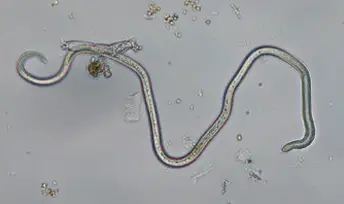
Beech leaf disease is caused by an invasive foliar nematode (a microscopic roundworm). Its origin has not been confirmed. American and European beech trees are susceptible to BLD.
The nematode responsible for BLD invades the buds of beech trees from mid-summer into autumn where they feed and overwinter. It is this feeding which causes symptoms to appear. BLD nematodes are spread through wind, rain and birds.
Symptoms & Diagnosis
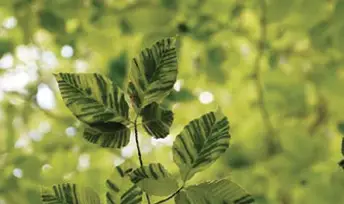
Symptoms of BLD first appear as dark-colored interveinal banding on the foliage. Leaves become distorted and may cup and curl before shedding prematurely. Under severe pressure buds are killed outright resulting in branch dieback and the death of the tree in 3-7 years depending on the vigor of the tree.
Treatment
Several treatment options exist for Beech Leaf Disease. The preferred treatment is a trunk injection of a systemic fungicide. Studies have shown that one injection can provide two years of effective control of nematode populations and BLD symptoms. Nematicides have shown to be effective at controlling BLD symptoms, but require multiple applications per year and can impact non-targeted species. Trunk applications of phosphites are effective at increasing plant vigor, however they are ineffective against nematodes.