Armillaria Root Rot
Armillaria spp.
Description
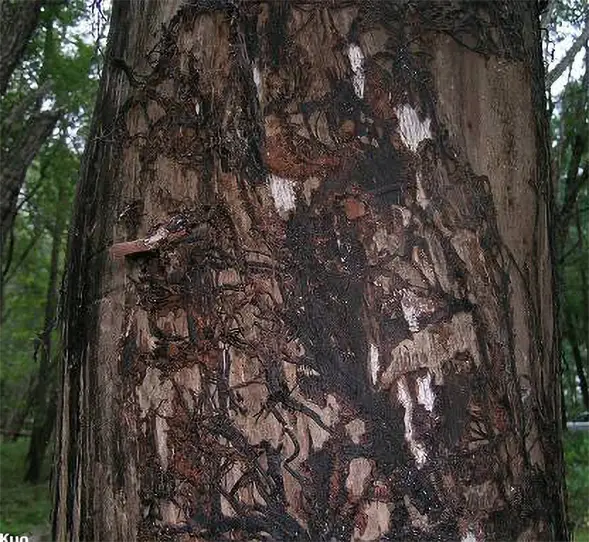
Armillaria mellea is a common soil-borne fungus that lives on a wide range of woody and herbaceous plants. Under natural conditions, Armillaria mellea usually inhabits the root system of most native oaks without ill effect. But, when trees become stressed, susceptibility increases. The fungus can then begin rotting the roots. The loss of roots results in trees being unable to absorb water and nutrients. Severly affected trees will fall over from lack of root support.
Symptoms & Diagnosis
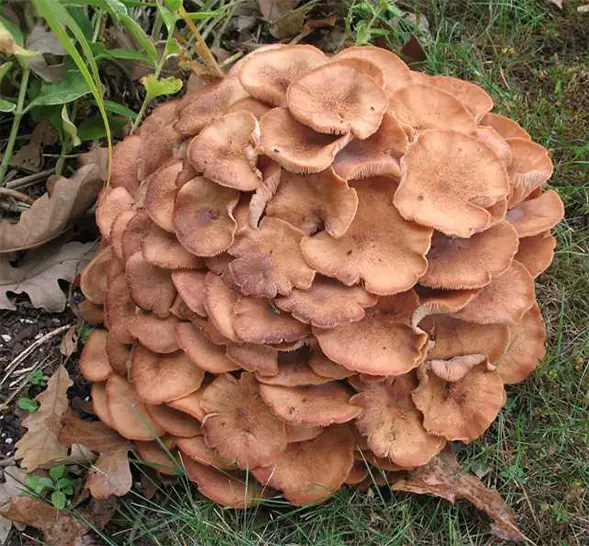
Infected plants usually show a decline in vigor, noted by yellowing foliage and reduced leaf size and number. This indirectly results in slow radial growth and callus formation over wounds. Some infected plants deteriorate slowly over a period of years while others may wilt and die abruptly. Mushrooms growing at the base of a tree are a sign of root rot.
Treatment
There are no treatments available to control or cure Armillaria Root Rot. Healthy, vigorous trees are best suited to resist infection. Therefore, maintaining trees free of insect and disease reduces the risk of trees becoming infected with Armillaria Root Rot.
Management
Armillaria fungus is very susceptible to drying out, therefore, providing good drainage and avoiding excess irrigation is important. Proper cultural practices and the use of good sanitation helps in the management of Armillaria root rot.
Affected Species
- Quercus spp. (Oaks)
- Acer spp. (Maples)
- Cercis spp. (Redbud)
- Cercidiphyllum spp. (Katsura)