Anthracnose
Discula spp.
Description
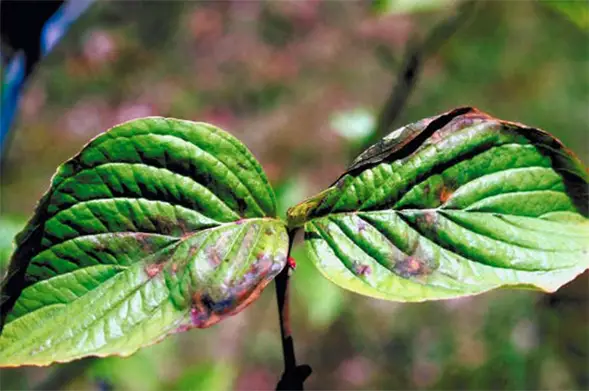
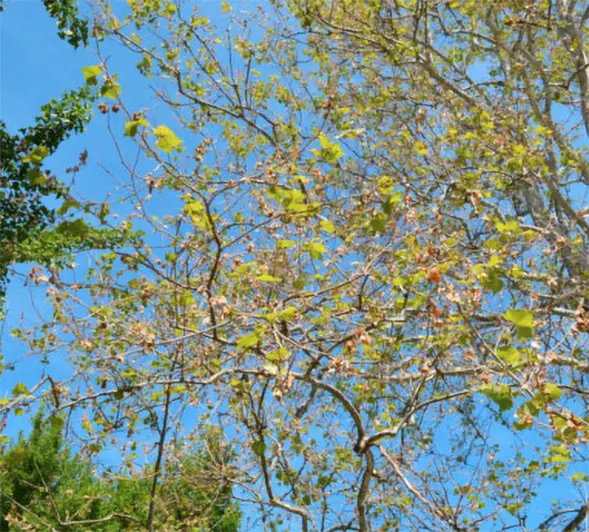
Anthracnose is a group of diseases which cause dark, sunken lesions on leaves, stems, flowers and fruits of trees. Infection is most severe during mild, wet spring and fall weather. Prior tree stress induced by winter damage and summer drought can exaggerate infection severity. Recurrent yearly infections reduce tree vigor and can result in tree mortality.
Symptoms & Diagnosis
Anthracnose symptoms vary by tree species. Leaves typically develop tan to purple necrotic patches along the leaf margins and veins. Young infected leaves become curled and distorted with only a portion of each leaf dying.
Treatment
Foliar applications beginning at bud break help minimize the presence of Anthracnose. If conditions are favorable to infection, additional treatments are required. Treatments are applied at 2 week intervals to help protect new foliage as it emerges.
Management
Pruning to improve airflow and remove diseased foliage can help reduce disease presence and severity. Managing plant stress is a crucial component of disease management. Plants can remain healthier and aesthetically pleasing longer by properly managing water, avoiding compaction and grade changes, and controlling insect damage. Fertilization improves tree vigor and disease resistance.
Affected Species
- Cornus spp. (Dogwood)
- Fagus spp. (Ash)
- Platanus spp. (Sycamore)