Ambrosia Beetle
Numerous Species
Description
Ambrosia beetles are opportunistic pests which favor stressed and declining trees. Female ambrosia beetles bore into a trees xylem in the spring and introduce a symbiotic fungus which they use for nutrition. Damage to xylem restricts water movement in the tree and can result in fatality.
Symptoms & Diagnosis
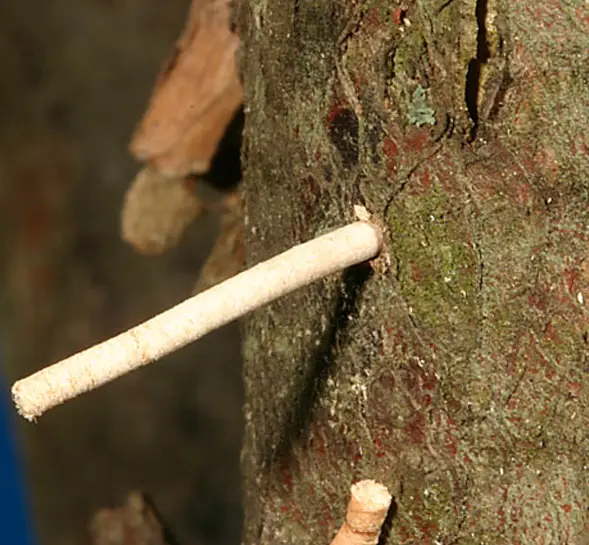
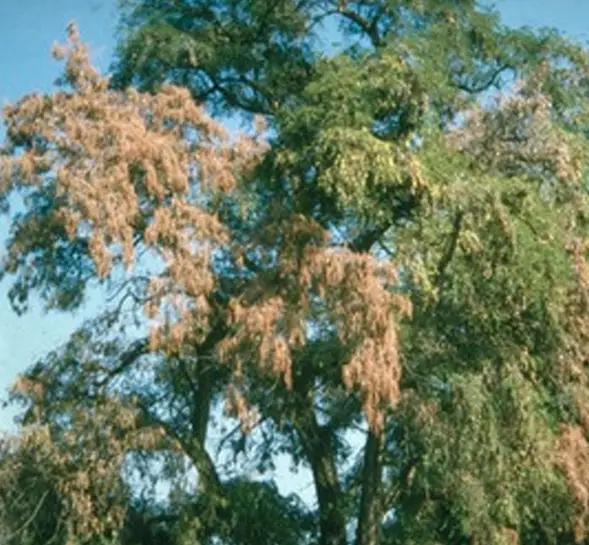
Ambrosia beetles typically attack young and thin barked trees. The first indicators of attack are thin, toothpick like frass tubes emerging from small diameter branches. Entire branches eventually turn brown as the limb shuts down. Cutting into the bark reveals black, stained tissue.
Treatment
Ambrosia beetles are most effectively controlled with preventive treatments that discourage the insects from attacking trees. Young, thin barked, and stressed trees should be treated to help prevent attack. Infected branches should be removed to prevent further spread.
Management
Managing tree stress is a crucial component in insect management. Plants can remain healthier and aesthetically pleasing longer by properly managing water, avoiding compaction and grade changes, and controlling disease damage. Fertilization improves tree vigor.
Affected Species
- Fagus spp. (Beech)
- Cornus spp. (Dogwood)
- Cercis canadensis (Red Bud)
- Magnolia spp. (Magnolia)