Volutella Blight
Pseudonectria rouselliana
Description
Boxwoods and Pachysandra are both susceptible to Volutella Blight. This disease girdles stems and causes branches to die back. Infection could include a solitary stem or a majority of the plant. Whole shrubs and entire beds of Pachysandra could be lost due to Volutella Blight.
Symptoms & Diagnosis
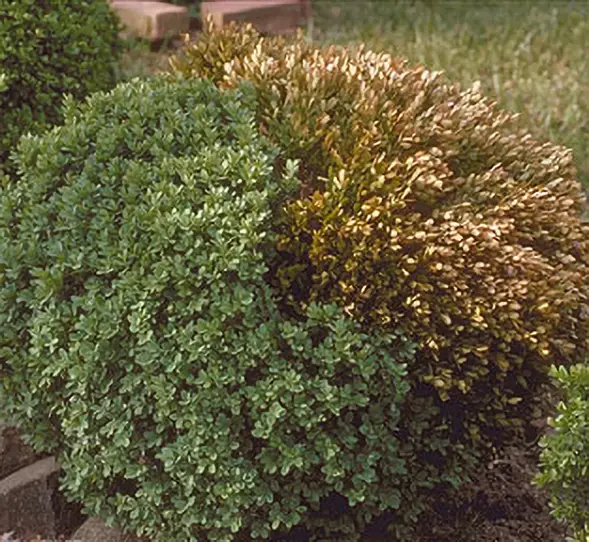
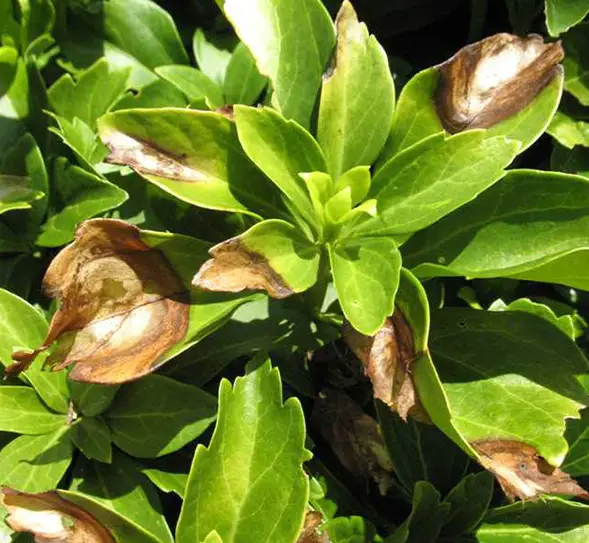
Before new growth appears on Boxwoods, leaves on the tips of branches turn red, then bronze, and finally yellow-tan. Salmon colored fungal spots occur on the underside of the leaf and along infected stems. The bark of infected stems may be loose and peel, revealing discolored wood underneath. Pachysandra develops irregular tan to brown blotches, eventually killing the entire plant.
Treatment
Diseased branches should be pruned out to reduce the potential for infections spreading. Copper-based treatments can be used to suppress the disease, but can not cure infections. Thinning dense shrubs reduces infection potential by improving air circulation and light penetration. Pachysandra can be rejuvenated through mowing when foliage is dry and performing a thorough cleanup of all debris.
Management
Managing plant stress is a crucial component of disease management. Plants can remain healthier and aesthetically pleasing longer by properly managing water, avoiding compaction and grade changes, and controlling insect damage. Fertilization improves tree vigor.
Affected Species
- American Boxwood
- English Boxwood
- Pachysandra