Sudden Limb Drop
Description
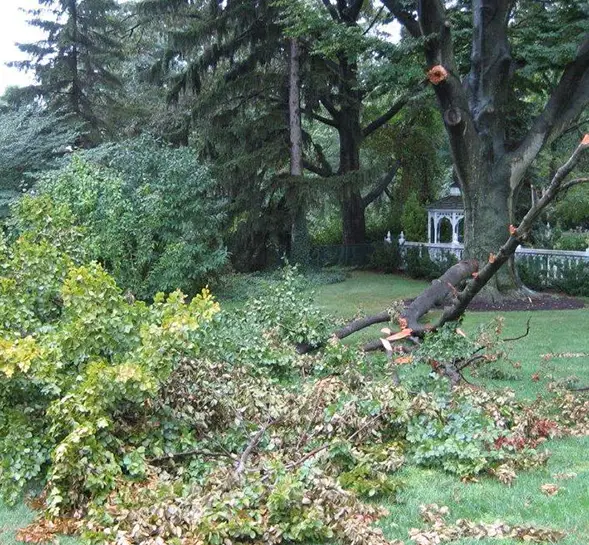
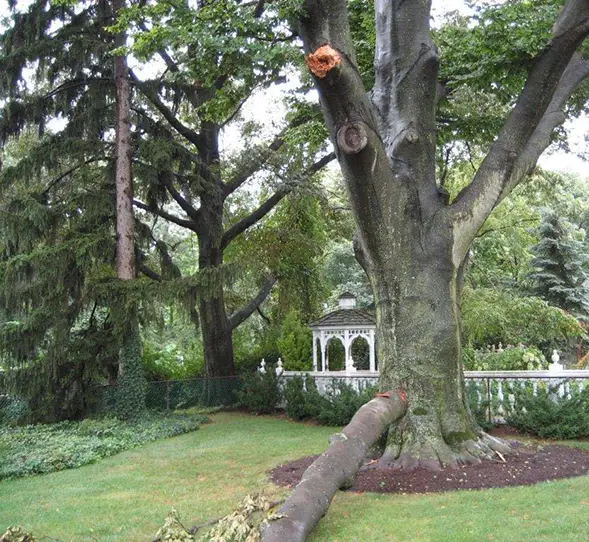
Tree branches will sometimes fail due to defects and unbalanced loads of foliage, but there is another kind of failure that known as sudden limb drop. Both should be considered a serious concern to life and property. This phenomenon has been reported across a wide variety of species in many countries, but there are no definitive answers as to why sudden limb drop occurs. Theories include change in branch movement, tissue shrinkage, internal cracks, and moisture changes. The most prominent theory hypothesizes ethylene gas, an abundant plant hormone, builds up in limbs when the tree's demand of transpiration exceeds the capacity of its vascular system. Especially present during calm, relatively warm days, this build up will weaken the branch at a cellular level and increase internal sap pressure. This discrepancy causes the tree to abort a limb to restore balance.
Symptoms & Diagnosis
Mature trees with limbs that extended horizontally, beyond the main canopy, fit the profile of trees that may be affected by sudden limb drop. Failed limbs will suddenly break to the ground. Upon inspection there are no obvious external defects, and the inner wood is broken bluntly, with no sharp splintering.
Management
There are no guaranteed methods to prevent sudden limb drop, but there are precautions that may be utilized to mitigate risk. The pruning and thinning of mature trees will help distribute weight and vascular flow evenly throughout the tree. Scouting for external injuries or low vigor plants will allow corrective measures to be emplaced before failure occurs. Most importantly, appropriate watering during hot summer months will help reduce drought stress and ethylene build up.