Slime Flux
Variety of species
Description
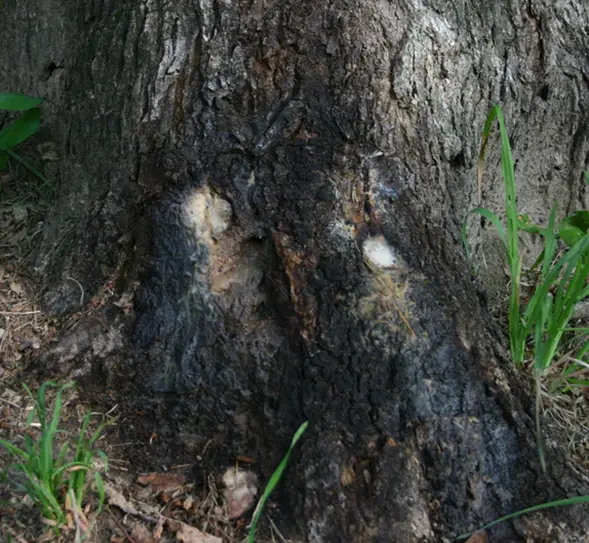
Slime flux, a bacterial disease, is a foul-smelling and unsightly seepage of sap from the trunks of shade trees. Slime flux is a common occurance on many large, mature oaks, tulip poplars, and elms. This disease is normally not a serious problem if the tree is otherwise healthy.
Symptoms & Diagnosis
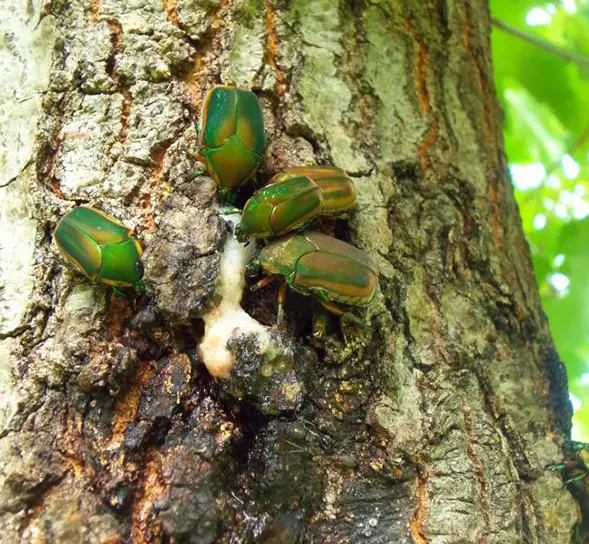
Infected wood will appear to be water soaked. Carbon dioxide is produced by bacterial fermentation. The pressure resulting from the build up of gas will force sap from the trunk through cracks in branch unions, pruning cuts, trunk wounds, or even undamaged bark. The oozing sap is visible as a clear to tan substance before becoming black from air exposure. The alcoholic smell produced from the fermented sap will attract eager insects. Affected branches may appear to be chlorotic and stressed.
Treatment
There are no preventive or curative measures for slime flux except for maintaining a good state of vigor and minimizing wounds and injuries to the trees. Holes should not be drilled to release sap, and wound dressings should not be applied.
Management
Managing tree stress is a crucial component of insect management. Tree can remain healthier and aesthetically pleasing longer by properly managing water, avoiding compaction and grade changes, and controlling insects. Fertilization improves tree vigor.
Affected Species
- Quercus spp. (Oak)
- Liriodendron tulipifera (Poplar)
- Ulmus spp. (Elm)
- Acer s.pp (Maple)