Rhizosphaera Needlecast
Rhizosphaera kalkhoffii
Description
Rhizosphaera, a disease common to Spruce and Fir, thrives in wet, humid environments. This disease is usually not fatal, but, overtime, if left untreated, the infected trees will experience continued thinning and eventual decline.
Symptoms & Diagnosis
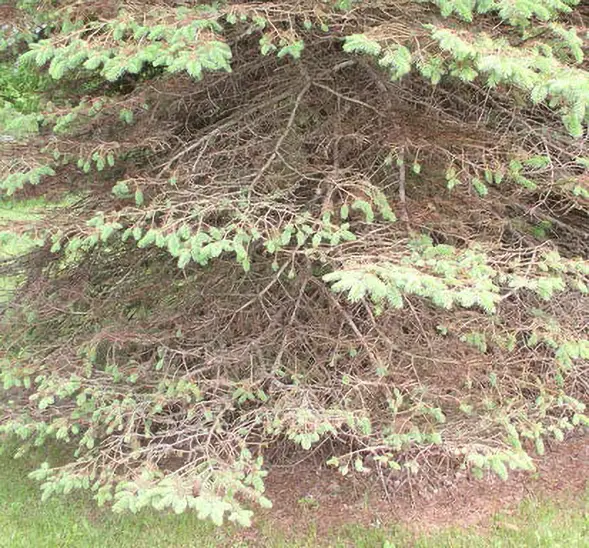
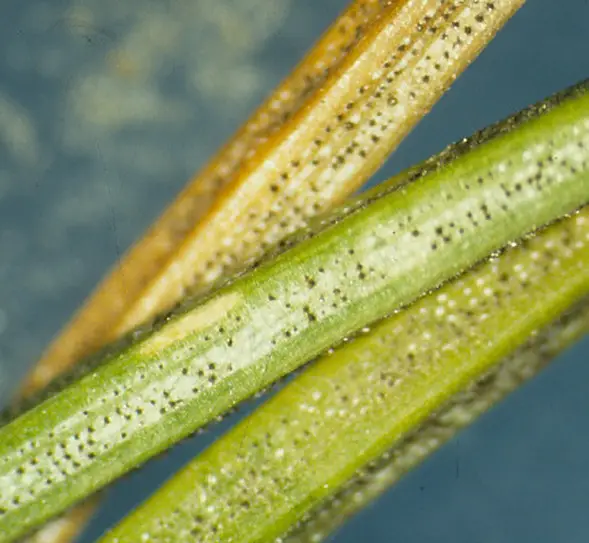
Needles infected with Rhizosphaera will display a characteristic browning or purpling of lower branches before they die and the disease spreads upwards through the canopy. Small black spots appear in rows on the underside of infected needles. Infected trees appear to be thin, sometimes with only the current year's growth still intact.
Treatment
Proper timing and diagnosis is key to the effective control of Rhizosphaera. Most effective treatment is achieved by coinciding treatments with the elongation of new needles. Multiple applications on new and old growth helps provide protection through the growing season. Removing infected needles on the ground is important for a more sanitary environment that reduces disease activity.
Management
Managing tree stress is a crucial component of disease management. Tree can remain healthier and aesthetically pleasing longer by properly managing water, avoiding compaction and grade changes, and controlling insects. Fertilization improves tree vigor.
Affected Species
- Picea (Spruce)
- Abies (Fir)