Seasonal Drop of Conifers
Description
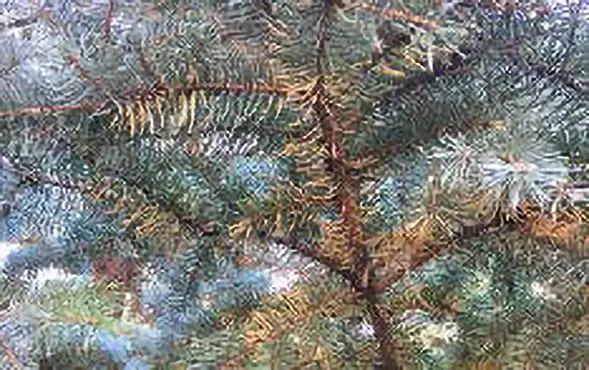
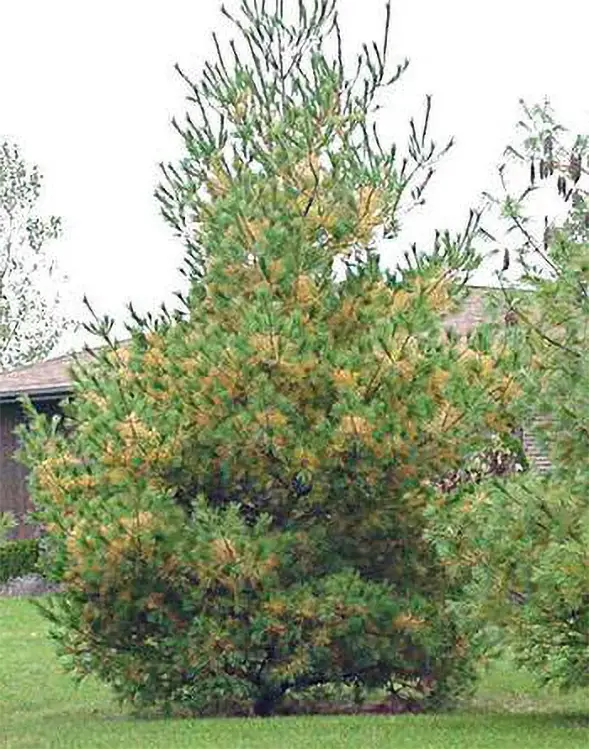
Each year, evergreen trees experience a seasonal needle drop that is a normal part of the plants cycle. Needles have a varying lifespan depending upon species, and do not remain attached to the tree forever. As summer turns to fall, needles turn from yellow to brown and drop from the tree. Some years can be quite subtle and other years dramatic. Tree species can also play a role in how dramatic the needle drop can be.
Natural Needle Drop
Depending upon species, a tree will begin shedding 2-5 year old needles each autumn. Natural needle drop occurs only on the inner needles. The outermost needles will remain green. White Pine trees have the most dramatic change, as they can shed 2-3 year old needles simultaneously, leaving only the current years growth intact.
When is Needle Drop a Problem?
Although the vast majority of needled evergreens shed needles in the autumn, several species can shed in the spring and summer months. If entire branches or needles at the tips of branches are dying it could be an indicator of a tree stressor and should be examined by a Shreiner Arborist. Insects, diseases, and root disturbance can cause needle drop during the growing season and require attention.
Deciduous Conifers
Not every conifer is an evergreen tree. Several species commonly called "evergreens" are actually deciduous and drop all of their foliage each year. Deciduous conifers in Pennsylvania include:
- Larch
- Bald Cypress
- Dawn Redwood