Japanese Beetle
Popillia japonica
Description
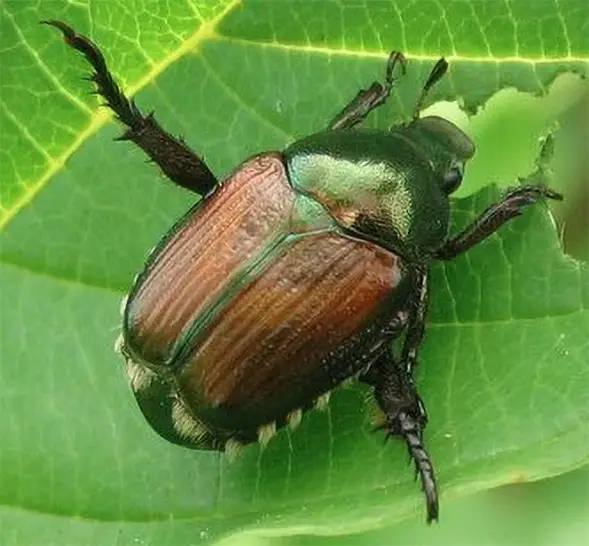
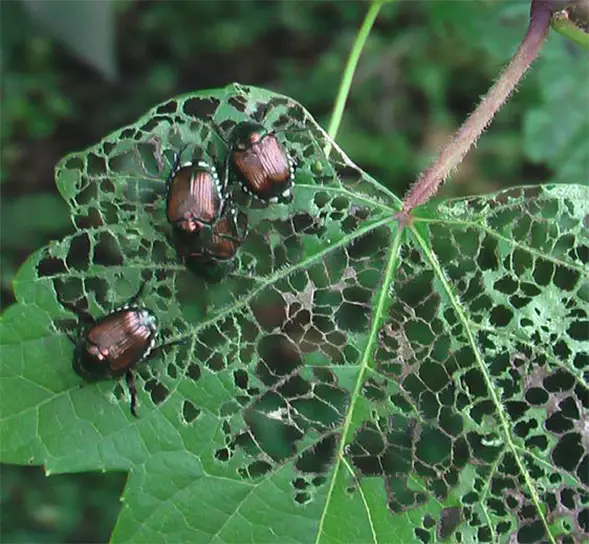
Japanese Beetles are a nuisance pest of over 300 different host plants throughout the landscape. Though damage to trees and shrubs are most noticeable, their life begins in the soil, where the larvae feed on the roots of grass. Adult beetles feed in large groups, quickly defoliating shrubs and trees.
Symptoms & Diagnosis
From late June to early July, adult beetles emerge from the soil and begin feeding on trees and shrubs. Often, the upper canopy is defoliated first and most severely. Trees with extensive feeding damage turn brown and become partially defoliated. Japanese Beetle grubs feed below ground and chew on the roots of turf and ornamentals. The first evidence of grub injury in turf is the development of localized patches of pale, dying grass that display symptoms of drought stress.
Treatment
Controlling Japanese Beetle damage in the landscape requires controlling both the adult and larval lifestages. To prevent grub growth and adult feeding damage, systemic application may be applied to the soil or foliage before emergence. Contact and systemic treatments may be used in a curative manner after the adults have emerged.
Management
Managing plant stress is a crucial component of insect management. Plants can remain healthier and aesthetically pleasing longer by properly managing water, avoiding compaction and grade changes, and controlling disease infestation. Fertilization improves tree vigor.
Affected Species
- Rosa spp. (Roses)
- Tilia spp. (Linden)
- Malus spp. (Crabapple)
- Lagerstroemia spp. (Crepe Myrtle)
- Ulmus spp. (Elm)