Fireblight
Erwinia amylovora
Description
Fireblight is a destructive bacterial disease that effects many ornamental and fruiting trees such as apples, pears, and crabapples. The disease is systemic, highly contagious, and pathogens can be spread by insect pollinators and rain. Young plant tissue and flowers are especially at risk for infection.
Symptoms & Diagnosis
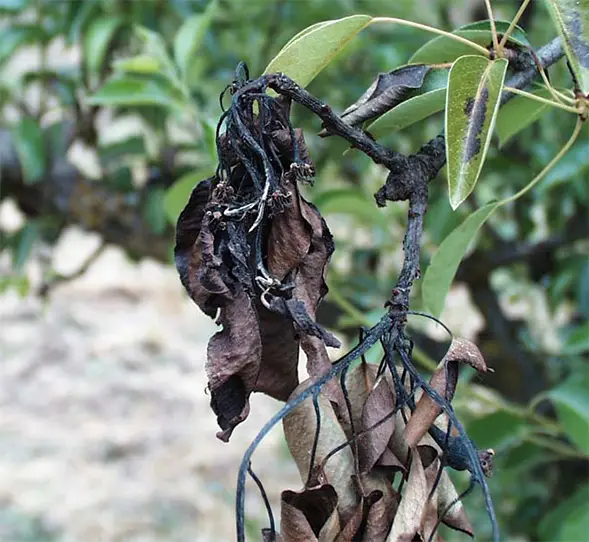
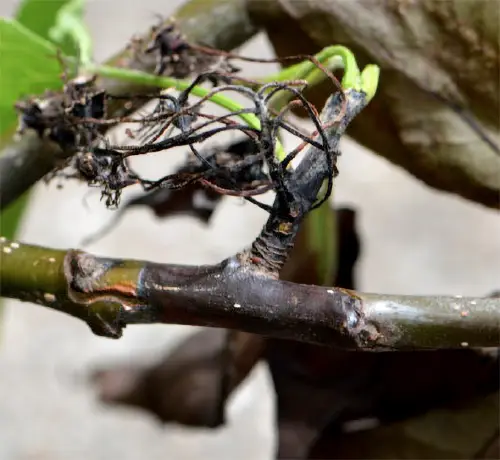
The first symptom of Fireblight to appear is blossom blight. The blossoms appear water-soaked and quickly turn brown to black. Shoots and leaves will soon turn brown and bend over resembling a shepherd's crook. Under warm and humid conditions, bacterial ooze can be observed on the shoots and the infection will travel down the branch.
Treatment
Most serious Fireblight infections begin during bloom. Appropriately timed treatments can be applied to reduce disease development. Infected tissue should be removed and tools disinfected between pruning cuts to avoid spreading the innoculum.
Management
Fireblight is influenced primarily by seasonal weather. Temperatures between 75-85 degrees along with periods of rain are ideal for disease development. Avoid irrigating trees during bloom. Infected wood and tissue should be removed as it develops to prevent further spread. Fertilization is not recommended.
Affected Species
- Malus spp. (Apple)
- Malus spp. (Crabapple)
- Crataegus spp. (Hawthorn)
- Pyrus spp. (Pear)