Cedar-Rust Diseases
Gymnosporangium spp.
Description
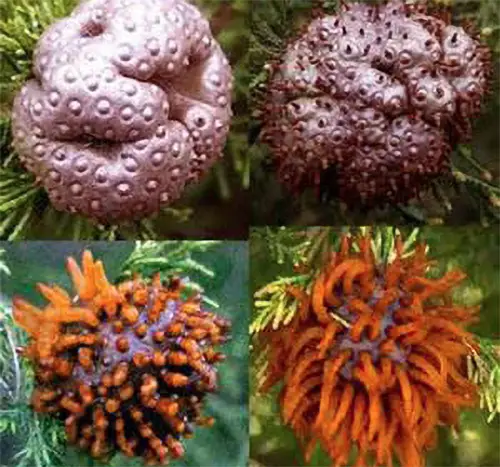
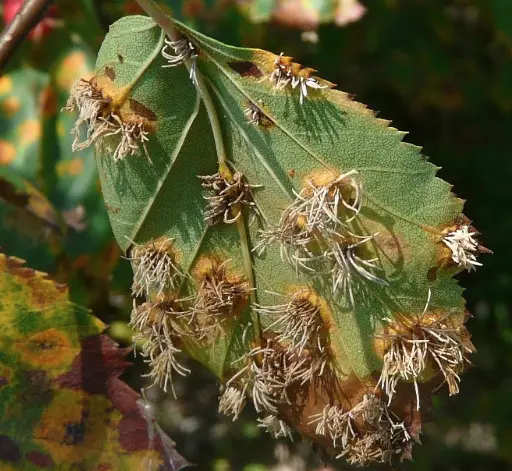
Cedar-rust diseases require two living host plants to complete their life-cycle. The rusts spend half of their life on cedars and the other half on members of the Rosaceous family of trees. Rusts manifest as orange galls on Cedars and as bright orange and red spots on leaves. Rusts infect many important fruiting and flowering trees.
Symptoms & Diagnosis
Rust fungi spend the winter on Juniper hosts. Symptoms begin as swollen growths on branches which mature into bright orange gelatinous galls emerging in spring and persisting several weeks. On Rosaceous hosts, lesions and fruiting bodies appear on leaves mid to late summer. Powdery orange spores are released as the disease develops.
Treatment
Frequent scouting is effective in detecting diseases before an outbreak occurs. Foliar applications beginning at bloom to susceptible species reduces spore development. Rosaceous plants require multiple treatments throughout the season to control the environment.
Management
Removing galls from infected hosts before sporulation begins can reduce the amount of spores in the immediate landscape. However, spores can travel several miles in the wind. Treatments applied during disease development helps control rust diseases on your trees.
Affected Species
- Malus spp. (Apple)
- Juniperus spp. (Cedar)
- Malus spp. (Crabapple)
- Crataegus spp. (Hawthorn)