Brown Rot
Monilinia fruiticola
Description
Brown rot is an important and devastating fungal disease of orchard and ornamental trees. Infection is most severe during mild, wet spring and fall weather. If conditions favor disease development, entire crops can be lost.
Symptoms & Diagnosis
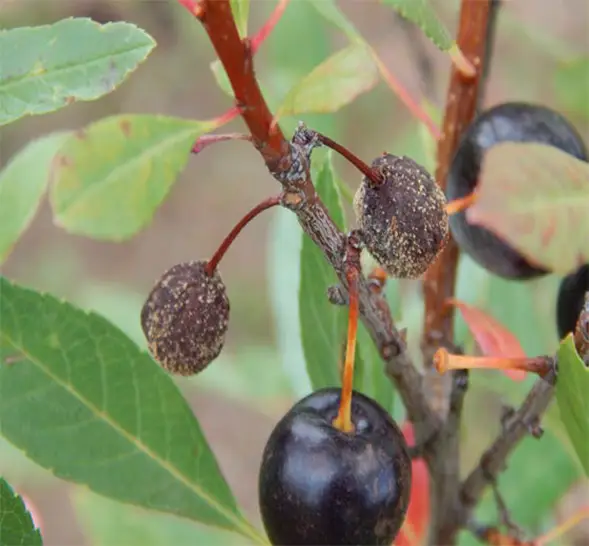
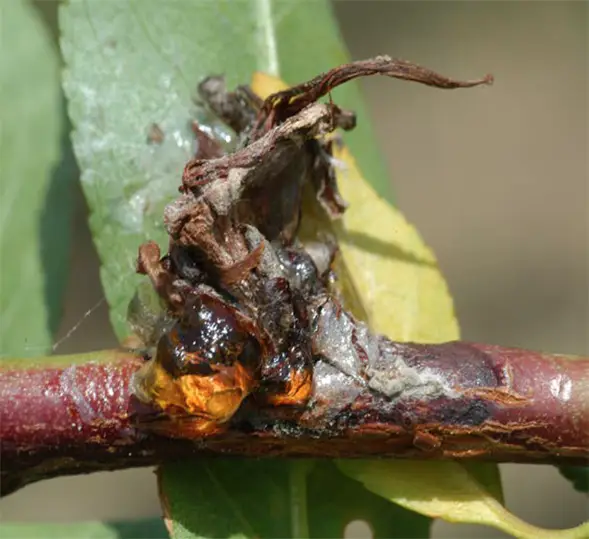
The first symptoms of brown rot appear in spring as blossoms develop brown-red patches and fungal masses. As the infection spreads from the blossoms, cankers will appear on twigs and branches. Fruit infected by brown rot will develop tan-colored patches of necrotic tissue. Entire fruit may be infected in as little as 48 hours before wilting into hard, gray ‘mummies’.
Treatment
Brown rot is controlled with preventive treatments applied prior to disease development. Multiple treatments are applied at bud-break and fruit formation to help protect new tissue.
Management
Brown rot thrives in humid and shaded environments. Pruning to improve sunlight pentetration and airflow helps reduce disease infection. Plants can remain healthier and aesthetically pleasing longer by properly managing water, avoiding compaction and grade changes, and controlling insect damage. Fertilization improves tree vigor.
Affected Species
- Prunus spp. (Cherry)
- Prunus spp. (Plum)
- Prunus spp. (Peaches)
- Prunus spp. (Nectarines)