Black Knot
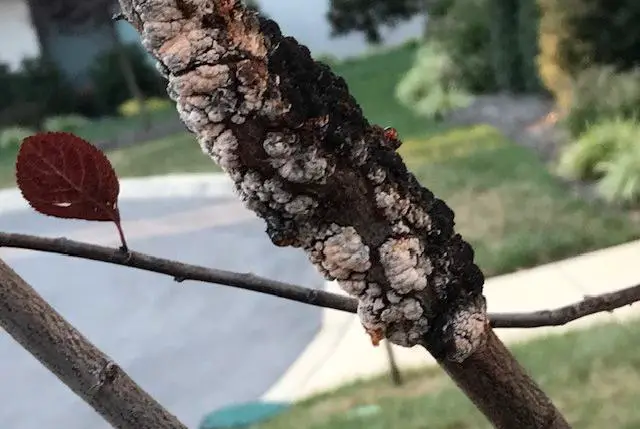
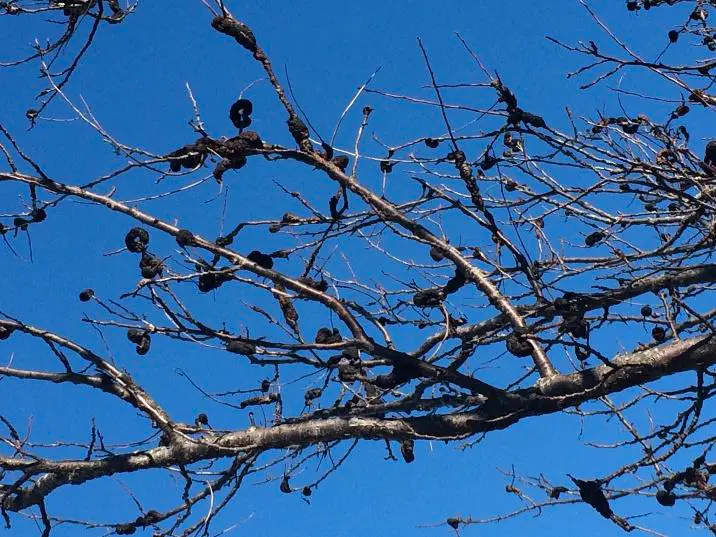
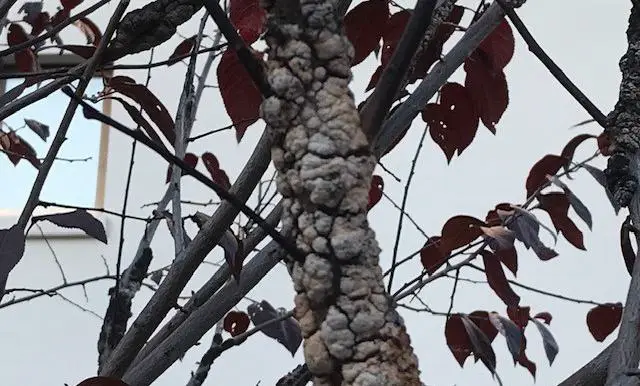
Black knot is a common fungal disease of Prunus trees including ornamental, edible, and native plum and cherry trees. Hard swollen black galls (tumor like growths) form on branches and occasionally on trunks.
Cause
Black Knot fungus is caused by the pathogen Apiosporina morbosa. The fungus survives the winter in existing black, swollen galls (knots) on infected twigs and branches. In spring, the fungus produces spores during wet weather. These spores are carried by wind or rain to young shoots, wounds, or developing stems of susceptible trees. The spores germinate and infect the host tissue, slowly causing swellings that enlarge over time. These knots eventually harden and turn black, restricting nutrient flow and weakening branches.
Symptoms
Symptoms of Black Knot exhibit hard, black galls that develop over 1–2 years, the swellings enlarge, harden, and turn into rough, black, coal-like knots that can be several inches long. Affected branches may become bent or deformed near the knots and branches beyond the knot often slowly decline.
Treatment
Current treatment protocols recommend removing visible galls to limit potential spread of fungus. Properly dispose of the pruned material by discarding and not leaving on property. In between pruning cuts, sanitize equipment to reduce further spread of the fungus. As a preventative, boosting plant vigor through fertilization will help build the tree’s natural defense system to this disease. The recommendations above will only mitigate symptoms and will not cure.