Bagworms
Thyridopteryx ephemeraeformis
Description
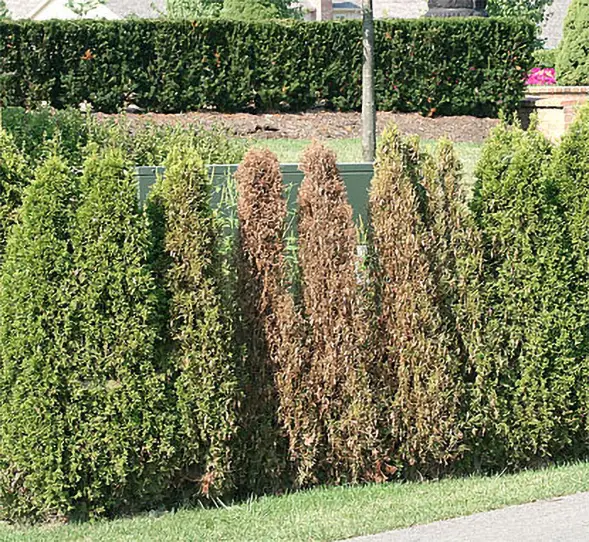
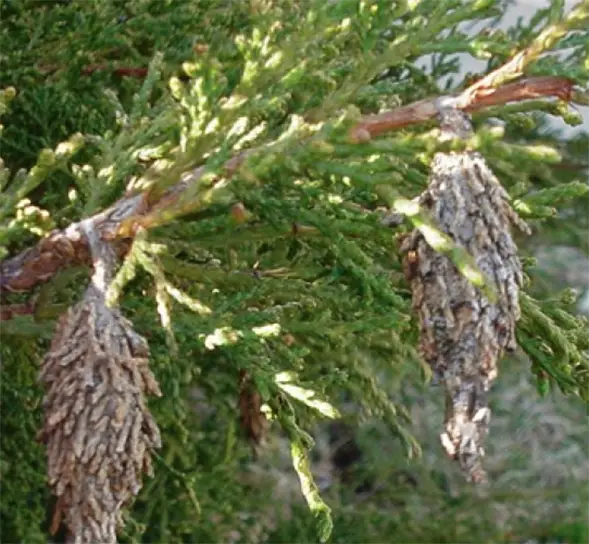
Bagworms are a common pest in the landscape most easily recognized by the case or bag that the caterpillar forms and inhabits. The insect causes extensive damage to many species of conifers and deciduous trees as it eats and uses the plant foliage for its bags.
Symptoms & Diagnosis
Bagworm larva begin to hatch, feed, and construct bags during May and June. Their characteristic bags are built using silk produced by the insect and portions of the host plant. In large numbers, damage from bagworms can quickly defolitate a tree or shrub.
Treatment
If an infestation is small enough, handpicking or cutting the bag from the host plant before egg hatch or after mating season may provide adequate control. A large infestation requires appropriate treatments to be applied after larva have hatched. Treatments lessen in efficacy as the larvae mature and expand their bags.
Management
Managing tree stress is a crucial component of insect management. Tree can remain healthier and aesthetically pleasing longer by properly managing water, avoiding compaction and grade changes, and controlling insects. Fertilization improves tree vigor.
Affected Species
- Thuja (Arborvitae)
- Juniperus (Juniper)
- Picea (Spruce)
- Gleditsia (Honeylocust)